Weekly Reading — 2026-08-02

In Defense of Despair

https://www.newyorker.com/culture/essay/in-defense-of-despair

I say despair in lieu of any other word because I like the weight of it, the way it both sounds and feels. Depression and anxiety are clinical terms, the terms doctors see when they search charts to learn about my afflictions. But despair feels like something one can sink into, even comfortably, to a degree; I can be consumed by it while still engaging in my quotidian activities. I bring up my little group, my small Island of Misfit Survivors, because it is one of the rare places where I feel secure in an abandonment of hope. Hope is something I get asked about more than I would like to. During stops on my recent book tour, people asked me what I’m hopeful about, and what words I can offer as a salve for the feelings of anxiety and uncertainty that many people have lately been immersed in. In interviews, my interlocutors sometimes lean in and say, “But it isn’t all bad. . . . Is it?” And I laugh a little bit and shrug. I’ve realized that most people believe in this strange mythology, which I may have had access to once but am not interested in locating anymore. The propulsive moments that some might consider signs of hope I have renamed necessity. Hope means both everything and nothing at all, and yet it is always purported to be within reach. Hope is the fluorescent bird. The bird makes no sound. It is in a cage. No one can find the key, and no one has seen the key in a very long time, and they aren’t sure that they’d even free the bird if they found the key. And yet, collectively, people must keep asking for it.

I often consider the flexibility of language, in a very literal, unpoetic sense. Its uses are pleasureful, treacherous, devastating. For example: I am writing about the beauty of sunlight and the sight of my beloved dog’s face in the same language that a Department of Homeland Security head uses to call for more rapid and “efficient” deportations, an “Amazon Prime for Human Beings.” When it comes to horrors given shape through the functions of language, even this does not haunt me as much as a press conference held by children in Gaza in 2023, during which they pleaded in English for the world to protect them, despite the world’s prolonged and ongoing failure to answer that call. Language fails at the feet of an empire’s violence; language fails to scale the ever-growing wall between who is and isn’t deemed worthy of a life. Yet I am trying to use this same failing machinery to communicate how, for the sake of my own fragile heart, and sometimes fragile brain, I remain more committed to honesty than I do to optimism.

The Joke that I tell works, in my head, because in my late teens and early twenties I felt, selfishly, that the worst parts of the world existed only in the small radius of my various heartbreaks. And, to the credit of those heartbreaks, some of them were worthy of that lie. What I love about the heart is that it’s capable of breaking in infinite ways; may we never live long enough to experience all of them, but may we live long enough to experience the ways the heart can repair itself for subsequent breakings. The cycle of rupture and repair is a requirement of living, a cost of surviving, something that goes hand in hand with another reality of survival: that, throughout your life, you may not only lose people but also gain them.

Eight years ago, when I first joined my group, I couldn’t stop orbiting my own pain. After three weeks, I was pulled aside by the elder who had brought me into the fold in the first place, and he told me something that has defined a not-insignificant part of my living ever since. He said, “Your pain is unique, because it’s yours. And you get to have that. But, when pressed up against all of the pain in the whole wide world, it isn’t special. It can be unique, but it can’t always be special.” I had to age into seeing past my own desire for an exit, which was fuelled by a wish to, quite simply, not feel the way that I felt anymore. I don’t mean that I adopted a basic “it could always be worse” mind-set. I mean that, through an endless cycle of breakage and repair, I’ve built up a renewed depth of feeling, and my world view, cynical as it might be at times, is informed by that accrual. I have lived long enough to operate almost in reverse, starting with the broadest scope. I can say that I have seen the state of the world and that I am not optimistic any population can return from some of the lines people have collectively crossed, either willingly or owing to the complicity of, say, paying taxes to a violent state. I do not think that there’s a newer and better world that can be built with the knowledge of a genocidal campaign being carried out on a live stream for a year and a half and counting. The world at large is seemingly fine with what we are witnessing, and I think that suggests the irreversible unwellness of a people, of a society.

Roberta Flack’s Musical Transformations

https://www.newyorker.com/culture/postscript/roberta-flacks-musical-transformations

The expansive machinery of loss contains many moving parts, interconnected tragedies that occasionally become interconnected blessings. There is the tragedy and blessing of time, which opens up to the tragedy and blessing of memory. I find myself wandering through a kind of extended wilderness of sound on mornings when I realize that my mother has been gone for so long that I cannot clearly remember her speaking voice, only a word or a half phrase surfacing in my mind before the rest tucks itself out of reach. The bewildering but wonderful blessing is that I do recall my mother’s singing voice, vividly, as one of the first sounds of my childhood. Whether or not someone is a “good” singer, I think, has to do in part with how much we love the person doing the singing, more than it has to do with whether or not they are an adequate messenger for someone else’s song, or an adequate accompanist to another voice spilling from a speaker. All of this is to say that I first encountered Roberta Flack’s music through the voice of my mother. I don’t remember which song or songs, I just remember hearing my mother sing a song that was on the radio. My mother loved Flack, and so I loved her, and I was sad to hear this week that Flack had died, at the age of eighty-eight, in part because I knew that my mother would be sad.

But I was also sad because I first adored Flack as a translator of the emotions in someone’s song—going above and beyond simply covering a tune to extract some new reserves of feeling, or narrative, or to sing it so well that her own desires colored it anew. This ability was not entirely surprising, given Flack’s musical background. She had sharpened her already formidable gifts at Mr. Henry’s jazz club, in D.C., where she had a residency in 1968. People would line up around the block to see her play a set list that included covers and standards. Flack’s début album, “First Take,” was recorded in just ten hours in February of 1969, in the space between the assassination of Martin Luther King, Jr., and the summer of Woodstock, and the cultural realignments that followed. It is my favorite Flack record, one that is mournful, enraged, and constantly seeking. But I most love it for its transformations. The jazz standard “Ballad of the Sad Young Men,” which closes the album, was written in 1959, by Tommy Wolf and Fran Landesman, for the musical “The Nervous Set,” a production centered on an avant-garde magazine publisher and his wife, a Beat beauty, and their dysfunctional marriage, which cannot be saved by the spoils New York City has to offer. “Ballad” is a sombre tune, no matter who sings it, be it Tani Seitz, in the original cast recording; or Shirley Bassey, singing it live with her hands wrapped around her shoulders as if she has, in the midst of her own loneliness, been charged with keeping herself warm; or Rickie Lee Jones, whose vocals are half slurred around the light picking of a guitar. During Flack’s time teaching music in D.C., in the years before “First Take,” she would sing the song during performances that took place five nights a week, three times a night, at Mr. Henry’s. Atlantic Records signed her to a record deal on the recommendation of the jazz musician Les McCann, who had seen her at the bar. Her performance of “Ballad of the Sad Young Men” on “First Take” is especially devastating for how Flack dwells on the setting of scene. You have to understand a scene before you understand all the ache that takes place within it.

This was, to me, the superpower of Flack: her willingness not just to take you to a feeling but to first build a place to contain it. In the song, there are sad young men, yes, sitting in bars. But it is the way Flack takes her time with the verses of the song, each comprising just a few lines of lyric, that makes you understand that these are sad young men who are seeking someone and fighting against time itself. They’re “growing old / that’s the cruelest part.” It is, perhaps, because Flack had sung the song in a bar so frequently, and for so long, that she came to understand its engine to be less “about” the ache echoing through the bar itself than about everything that carries someone inside a bar. Loneliness might be the song’s wings, but loneliness, pressed against the brutalities of time, is what makes it take flight.

Speaking of flight, Flack first heard “Killing Me Softly with His Song” on a plane in 1972, when the original, sung by Lori Lieberman, was featured on the in-flight audio program. Flack was so struck by the song’s title and by the song itself that she played the song multiple times during the plane ride, jotting down notes on the melody, and in two days’ time she had the arrangement. Flack’s version, released in 1973, is more urgent, with a propulsive backbeat that helps the song build toward its well-earned crescendo and its closure on a major chord. The B-side of the “Killing Me Softly” single contains Flack’s rendition of Bob Dylan’s “Just Like a Woman,” which is one of my favorite covers of any song in the history of songs, largely because it finds a way to overcome a cover-song pet peeve of mine, namely, the tweaking of lyrics to suit the gender of the singer. There was really no other way to finesse things here than to switch Dylan’s “she” to “I,” but the change has a strangely salutary effect. It affirms to the listener that, yes, Dylan may have been a somewhat sympathetic spectator of the “she” in question, but that Flack is the real deal, someone carrying the weight of both witness and experience.

Quincy Jones Had Something for Everyone

https://www.newyorker.com/culture/postscript/quincy-jones-had-something-for-everyone

In my youth, in the nineteen-nineties, my record-store experiences were governed by what was, or wasn’t, in my pockets. I was a frequent attendee at the bargain bin, because I had bargain-bin money; my older siblings had more buying power, and I didn’t want to be the only one to exit a record store empty-handed, so I’d dig through the cheap cassettes—deeply discounted joints from months or years past, or just some poor recording that didn’t hit the charts the way it was expected to and found itself prematurely in a graveyard of discarded tunes. I’d reach up on my toes and slide my money across the high counter and tell the cashier that I didn’t want a bag because I wanted to walk out with the tape in my hands, and put it right into my Walkman when I got into the car.

It was in the dollar bin at B&B Records, in Columbus, Ohio, that I found “Q’s Jook Joint,” a 1995 album curated, produced, and arranged by the pop-music impresario Quincy Jones, who died on Sunday, at the age of ninety-one. Though it eventually went platinum, and won a Grammy for best engineering, the album didn’t hit right away, perhaps because there were those who didn’t know what to make of its abundance. In the decade or so before “Q’s Jook Joint” was released, Jones had taken on the work that made him most famous in the mainstream pop-music world, producing a trilogy of albums for and alongside Michael Jackson, among them “Thriller,” the best-selling album of all time. Before that, he’d spent the sixties and seventies solidifying his bona fides as a producer, arranger, and musician, with a hand in seemingly everything from iconic pop tunes (like the titular song from Lesley Gore’s 1963 album “It’s My Party!”) to soul and gospel (like Little Richard’s 1961 album “The King of the Gospel Singers”) to a slew of jazz collaborations and vocal standards (including the final—and much underappreciated—Frank Sinatra solo album, “L.A. Is My Lady,” from 1984). By the time “Q’s Jook Joint” came out, in 1995, Jones had the rare kind of cultural currency that earned him reverence among his peers, his elders, and a younger generation of musicians across a broad spectrum of genres. “Q’s Jook Joint” is, among other things, a testament to that towering status, with fifteen sprawling tracks stuffed with guest stars. The intro alone fits twenty-nine people into a minute-and-a-half-long vocal collage, among them Miles Davis, Shaquille O’Neal, and Marlon Brando.

“Q’s Jook Joint” isn’t recalled as frequently or as fondly as many of the other projects that Jones helmed in the eighties and nineties. When I bring it up to even my most music-obsessive pals, their eyes shoot up to the sky and they mumble the name quietly as they sift through the record stacks in their brain and come up empty. It isn’t Jones’s finest work, but it is the work of his that most interests me, sentimentality aside (though, not too far aside, of course), because it is the album that most actively and eagerly commits itself to the possibility that Jones can, in fact, make something for everyone. There are ballads on the album next to New Jack Swing dance tracks with rap verses next to jazz instrumentals next to at least one song (“At the End of the Day (Grace)”) bordering on traditional gospel. I love “Q’s Jook Joint” because, in the middle of the nineties, with the musical landscape changing around him, with hip-hop and new technologies on the rise, Quincy Jones made an album that said “I can try this, too. I won’t watch this moment pass me by.” Jones understood what all great producers—and all great editors, coaches, or anyone else tasked with the transformation of others—should: that if you have to find your way to a kind of telepathy with an artist, operating as one mind, you can’t speed past the human element. You can’t sprint past the part where you get to know someone, their ambitions, their desires, the way they work when no one is looking. As Jones put it in one interview, “Being on the other side of the glass is a very funny position—you’re the traffic director of another person’s soul.”

Leading someone else’s soul to a place that it doesn’t even know it wants to go yet takes more than turning knobs. It takes more, even, than the brilliant musical intuition that Jones was blessed with, compounded by years of touring with jazz bands and orchestras, years spent arranging music. It takes more than sweat, the pure labor of repetition that Jones drilled on in the studio, the sweet sonic repetitions that showed up often in his compositions and productions. There is a video you can find on YouTube, from about ten years ago, of Quincy Jones at the French music festival Jazz à Vienne. It is short, maybe two and a half minutes long, and somehow has only a couple hundred views, but it is worth watching for the joy that Jones exhibits conducting a handful of horn players, a drummer, and a pianist in a jam session. He swings his arms, points exuberantly, gives signals, tries to nail down a repetitive loop that grows and grows. It’s a wonderful window into how Jones saw music, how he believed in training the ear on what the beat is doing. Even when letting a singer loose, he knew that rhythm would always end up having its say.

Medium

https://medium.com/@carmitage/wawer-23abeed78b57

Wawer.

How Polish Punks Sabotaged Nazi Occupiers

Press enter or click to view image in full size
Anti-Nazi graffiti distributed by the Polish Home Army’s Wawer Small Sabotage unit, Warsaw, April 1942. Scan from Stanisław Salmonowicz, Polskie Państwo Podziemne (Warsaw: Wydawnictwa Szkolne i Pedagogiczne, 1994), via the Polish Institute of National Remembrance.

Warsaw, December 1939. German forces had occupied Poland for three months. On the night of December 26, two drunk German soldiers died in a shootout at a snack bar on the edge of the city. The Ordnungspolizei responded by pulling 120 men and boys from their homes in the surrounding neighborhood of Wawer, holding a sham trial that lasted minutes, and shooting 107 of them. The youngest was twelve. Some were visiting family for the holidays. None had anything to do with the deaths at the snack bar.

This was the first large mass execution of Polish civilians under German occupation. It would not be the last.

A year later, a Polish youth resistance cell formed inside the Home Army and named itself after the village where the massacre happened. Wawer. They called their work “small sabotage.” The goal was to keep the occupation from ever feeling normal. To make the Germans nervous, the collaborators afraid, and the poles feeling inspired to continue fighting against their occupiers. Their tactics included graffiti, Nazi propaganda posters altered overnight so a triumphant announcement about advances into the Soviet Union carried a new date, 1812, reminding Warsaw what happened to the last army that tried to occupy. Polish flags raised on Polish national anniversaries in places where Polish flags were forbidden. Collaborators named in underground leaflets that circulated through apartment buildings before the Gestapo could collect them.

There were stink bombs in German movie theaters so the occupiers could not enjoy a night out. Fire alarms pulled at German public events. German propaganda loudspeakers hijacked mid-broadcast and used to play Polish messages before the crews could cut the power. Tires quietly flattened on the cars of SS officers eating in the last restaurants in Warsaw where the food still existed. Streetlamps across the city marked with the words Nur für Deutsche, only for Germans, a promise that the people who hanged Poles would themselves hang from those same lamps. Fake editions of Nazi-run newspapers printed and sold on Kraków sidewalks before the real editions reached the newsstands.

In February 1942, an 18-year-old named Maciej Dawidowski climbed the Copernicus monument in broad daylight, in full view of the police headquarters, and unscrewed the German plaque the Nazis had bolted over the Polish inscription claiming Copernicus for the German nation. The plaque fell into the snow. The underground press made sure every Pole in the city knew. The Germans retaliated by dismantling the statue of Jan Kiliński, a Polish insurgent hero, and hiding it in the vaults of the National Museum. Wawer’s response was to paint on the museum walls the words People of Warsaw, I am here, Jan Kiliński, and then to bolt a new plaque to the base of the Copernicus statue reading,

“For removal of the Kiliński statue, I am extending winter by two months. Kopernik.”

This is what the teenagers of occupied Warsaw did while the Nazi army held their country. They made the occupation look ridiculous. They also obstructed and sabotaged. And they did it knowing that Elżbieta Zahorska had been executed in 1939 for tearing down a single poster.

Their first graffiti campaign, started around Christmas 1940, painted two words on walls across Warsaw. “Pomścimy Wawer.” We will avenge Wawer. The Germans painted over it. Wawer painted it again. Over time, to move faster and get caught less often, they shortened the phrase to two letters. P and W. Eventually they fused the letters into a single symbol, an anchor shape that could be slashed onto a wall in two seconds. That symbol became the Kotwica, and the Kotwica became the emblem of the entire Polish resistance. Every act of defiance in occupied Poland, for the rest of the war, traced back to a graffiti campaign started by teenagers who wanted to remember 107 murdered neighbors.

In April 1942, the day before Hitler’s birthday, Wawer distributed roughly two thousand posters across Warsaw and painted this image on walls throughout the city. A swastika hanging from a gallows. The Nazis controlled the country. They ran the police, the courts, the trains, the press, and the food supply. Wawer did it anyway.

A lie told by occupiers to the occupied says that resistance only makes sense when it leads to certain, clear, and complete victory. That the calculation has to add up before the action is justified. That hope is the precondition of effort. It has never been how resistance actually works. The Polish teenagers who invented the symbol that defined a nation’s opposition to fascism did not have a plan. They had a can of paint, some slashed tires, and posters around town.

The people doing small sabotage in Warsaw in 1942 were not filing for a 501(c)3 or getting permits to march in approved areas. They were not waiting for the political winds to shift or an election. They looked at what was happening to their country and their neighbors and they acted.

That is the whole lesson. We do not fight because we know we will win. We fight because that is what you do when Nazis are around.

A note on how I found this story.

I’m prepping for a trip to Poland. Two projects. The first is a study of how Poland went from a post-Soviet wreck to becoming one of the twenty largest economies in the world, crossing the one-trillion-dollar GDP mark in 2025 and currently projected to overtake the Swiss economy by the end of the decade. Poland did this by doing the exact things American oligarchs keep telling us cannot be done. Rooting out corruption through strong institutional reforms and anti-monopoly agencies that kept the post-Communist economy from being captured by criminal oligarchs the way Russia’s was. They also invested heavily in public education. Polish fifteen-year-olds scored 489 on the 2022 PISA math exam, well above the American score of 465, on a test designed to measure real-world problem solving rather than memorization.

The second project is with Ukrainian refugees who have resettled in Poland after Russia’s 2022 invasion, the largest forced migration in Europe since World War II.

It takes 10 subscribers per article to make all of this happen.

Subscribe now

So what do you do next as one of The Existentialist Republic’s two to three million monthly readers? We have three full length books and a dozen booklets all available for free with download links below. You can also check out our four pieces of model legislation that are shared directly with legislators and activists. You can join the Discord community of nearly 1,000 organizers (when we open back up invitations).

Everything I just described runs on ten subscribers per article, about twenty cents per article for a subscriber.

You and I and 53,274 others have hit that minimum number of subscribers now for 21 articles in a row after missing it for several weeks. That’s 21 of the 30 days we need this month to keep everything moving.

Don’t let this be the reason you miss rent or skip a meal. For everyone else, you can be one of the ten today and make sure the articles, books, legislation, and training keep coming for everyone.

Thanks for being here.

Subscribe now

BuyMeACoffee.com/TheER

Check out our books, booklets, and model legislation for more info.

Toppling Tyrants: A Field Guide to Dismantling American Fascism — physical copy / free download

Conservatism: America’s Personality Disorder — physical copy / free download

Intro to Soft Secession — physical copy / free download

Oppositional Federalism and You — physical copy / free download

Grab Them By The E.A.R.R.: How to Get Politicians to Do What You Want — physical copy / free download

Activism Journal

More Free downloads:

Soft Secession: 100 Policies That Pass

Being Dangerous: Go From Activist to Operative

Soft Secession: 100 Policies That Pass

All Four Completed Model Legislation Bills

The Opposition Guide to Tax Warfare

Six-Panel Soft Secession Brochure

Prosecution Memo: Jonathan Ross

Bumper Stickers

It’s still not OK, boomer: younger Americans are flailing - and mad as hell

https://www.theguardian.com/us-news/ng-interactive/2025/dec/07/boomer-millennial-gen-z-housing

Illustration: Glenn Harvey/The Guardian

Almost every couple that I know in their 20s, 30s or even 40s has had the same argument with their parents before getting married.

The parents say to open a wedding registry. The couple responds that they do not want one. They don’t expect gifts from wedding guests (their “presence is enough”), and they have been cohabiting for years and already have plates, bedsheets and a blender. In fact, since they live in a small rented apartment, they barely have room for the plates that they do have – let alone a set of china.

Perhaps, they will timidly suggest, guests who really want to give a gift can donate to a honeymoon fund? Or better yet, make a small contribution toward a downpayment on a house?

The parents get upset. Asking for cash, they say, is “tacky”, and also puts people in the difficult position of having to choose an amount to give. The young couple will point out that they are not asking for cash, just giving an option for those who want to mark the occasion.

There will be a long argument, maybe even some shouting or tears, and the parents will win. As a compromise, there may be a house-fund bucket on the registry, down at the bottom after the really niche cookware. (If the couple is especially sneaky, they will pretend to go along with their parents, but rig the registry with unattractive gifts to make the fund look more appealing by comparison.)

In the end, the wedding will be lovely. And afterward the married couple may have a china set, but – like nearly half of US millennials – no house in which to put it.


Despite some signs that the wildly expensive housing market is cooling down, buying a home is still a fantasy for millions of younger Americans. In the 1980s, the median age of someone buying their first home was about 29. Today the median first-time buyer is 40 – and can expect their first home to cost twice as much money, adjusted for inflation, as their parents’ home did in the mid-1980s.

The situation is so bad that last month the Trump administration floated the idea of introducing a 50-year mortgage to make houses more affordable, then frantically walked back the idea when critics pointed out that a millennial buying their first home at 40 might die before paying it off.

This is a crisis, given how closely home ownership is tied to wealth creation in the US. The wealth gap between renters and owners has never been wider, and soaring prices keep enriching those who already own, while locking everyone else out. In fact, the newlyweds with the china set may be creeping into early middle age with few assets at all: no home, no significant investments, perhaps not even a car.

I am a millennial who came of age during a financial crisis, global recession and pandemic. No, most millennials and gen Zers are not starving to death. But our adult lives have been marked by stagnant wages, inflation, broken political institutions and a sense of national decline. Small wonder, then, that we feel cynical about our country and pessimistic about our future; that some of us are attracted to increasingly radical politics of both left and right; that we marry later and have children at far lower rates.

A recent study by economists at Northwestern and the University of Chicago predicted that Americans born in the 1990s “will reach retirement with a home ownership rate roughly 9.6 percentage points lower than that of their parents’ generation”, and that when owning a home feels impossible, people spend more, work less and take on riskier investments – a recipe for economic disaster.

Some observers have dubbed this attitude “financial nihilism”. If you have been working for years yet feel no closer to paying off your student debt or buying a house, why not “quiet quit” your job, put a lavish vacation on your credit card, or liquidate your last savings bond from Grandma and bet it all on online poker or a dubious cryptocurrency?

American baby boomers, born between 1946 and 1964, are the richest cohort in the history of the entire world. Yet they are also the first generation of Americans to leave to their children a world that is, by most common economic metrics, worse. So why are we still being told we would own a house if we drank less Starbucks, or shamed for failing to meet the milestones of a vanishing age?

And why, when economic alarms have been ringing for years, does it often feel like only younger Americans hear them?

‘For most of history, including when boomers came of age, living was cheap and things were expensive; today it’s the opposite.’ Photograph: H Armstrong Roberts/ClassicStock

Earlier this year, as part of my reporting on American politics, I was watching a video of Tucker Carlson, the rightwing commentator, giving a speech at a conservative political conference. I was somewhat distracted, until I heard something that made me rewind the video.

Between asides about how New York smells like “weed and halal food”, Carlson made a prescient point. “At some point the basic economics really matter,” he said. Rather than GDP, he argued that the health of the economy should be measured by something simpler.

“I’ve got a bunch of kids,” he said. “Can they afford houses with full-time jobs at, like, 27, 28? And the answer is no way. And the answer is that 35-year-olds with really good jobs can’t afford a house unless they stretch and go deep into debt.”

He continued: “And I just think that’s a total disaster … why? Two reasons. One, if people don’t own things, they don’t feel ownership of the country they’re in, and the country gets super volatile because people feel like they’ve got nothing to lose; when you have a lawn, trust me, you’re thinking long-term. Second, it’s really hard to have a family without a house, it is. It’s, like, super fun to live in an apartment if … there’s, like, a bar downstairs, you’re in a cool neighborhood, [but] you’re not going to have three kids there. You can’t.”

The “only young people in general that you will ever meet who have houses are young people whose parents help them”, he added. “And God bless their parents, that’s a perfectly great thing to do for your kids, but most people’s parents can’t afford to do that” – in part, he noted, because some are already in debt for their children’s education.

He called the situation a “national emergency”.

Carlson is not the first person to make these points, and leftwingers like Alexandria Ocasio-Cortez and Zohran Mamdani have made similar arguments in different forms. You know something is structurally broken when Carlson and AOC are, at least on this subject, reading from the same page. Either way, what he said struck a chord. It also made me think about my own family.

My parents bought their first home in 1985, when my mother was 29 and my father was 31, for about $50,000 (or $150,000 in current dollars). My father was an accountant and my mother was a sales representative at a commercial wallpaper company. The home was an apartment that they were able to buy, below market rate, when the building where my father rented converted some rentals to owner units. It was tiny – a glorified studio – but it was in Lenox Hill, in Manhattan, and they sold it at a profit just two years later.

They moved to the New Jersey suburbs, where they bought a three-bedroom fixer-upper with a yard. In 1992, they sold it for a profit and bought another house with a larger lot down the street. They somehow also found the money, time and energy to buy and renovate a fishing cottage in Pennsylvania as a summer house.

No, my parents were not representative of everyone. They were white, college-educated professionals, who for part of that period had dual full-time incomes, and they were unusually adventurous about real estate. They also spent nights and weekends doing DIY home renovations and scrimped to save money. (“We got takeout maybe once every two or three months,” my mother said pointedly, when I asked her to recollect. “And we brought bag lunches to work.” My father partly disputed that characterization, saying, “Maybe your mother did … I used to buy my sandwich in the city.”) Mortgage rates were also higher than now.

When my parents later separated, the suburban house with the big lot and the summer cottage were the first financial casualties. Still, even after their separation they both managed to land on their feet, home-wise.

I am 35 and owning a home seems unfathomable. Like many millennials (usually defined as people currently between the ages of 29 and 44), I did everything my elders advised. I got good grades in high school, worked part-time jobs to “build character”, graduated from a good university, and have now been working full-time for years. I am a journalist – which means I work in an industry that has been in decline for decades – but I am one of the lucky few who has a good job with a decent income and benefits. My girlfriend, who works at a research and strategy firm, also has a good job. We both hold master’s degrees.

We could move to a cheaper area, but both our jobs require us to be in or near New York City. (ConsumerAffairs recently calculated that it would take a typical New York state household 23 years to save enough for a down payment on a median-priced home.) So, like many millennials, we rent – spending, in our case, $27,000 a year.

You could say that that is a fair trade for a roof above your head. But that is all it gets. Our diligent rent payments build no equity – they are not even reflected in our credit scores. The more than $150,000 I have spent on rent in my life is money I will never see again.

None of this is a sob story, exactly. No one would call us poor. We get takeout, more than our parents would probably say we should, and we travel several times a year – though mainly to see family or attend weddings. We have nice things: good clothes, the obligatory (though secondhand) Le Creuset pot, a large and delightfully high-definition television. When you cannot have big things, you console yourself with small ones. Yet even scuttling these indulgences would not make much difference in our finances.

That’s partly because of an odd paradox of modern life. For most of history, including when boomers came of age, living was cheap and things were expensive; today it’s the opposite. As Derek Thompson and Ezra Klein note in their recent book, Abundance, the result is a weird dissonance for many Americans: luxuries and little treats are obtainable, yet the staples of life – housing, healthcare, groceries, transportation – are frustratingly costly.

Marc Andreessen, the venture capitalist, recently pointed out that if you get a hole in your wall, it is now cheaper to buy a flatscreen TV to cover the hole than it is to fix the drywall.

I called a handyman to see if that was true. It is.


Baby boomers may be one of the most resented groups in America. Every week, about 220,000 people visit a forum on Reddit that exists solely for the purpose of complaining about them – turning older people’s lectures about youth entitlement on their head in first-person reports of boomer “tantrums” or posts mocking the “Gravy SEAL” politics of conservative uncles.

On TikTok and Instagram, people debate why boomers have such a hard time empathizing with younger Americans. Some blame insufficient psychotherapy; others, more viciously, make insinuations about the long-term effects of 1960s lead-paint poisoning on the brain.

Some of this rage is just ageism, or the familiar rebellion of generation against generation, or the eternal standoff of parents wanting a “thank you” while their children wait for a “sorry”. But at its heart this ire has less to do with the actual realities of baby boomers’ lives – which are as variegated as those of any group, with some rich, some struggling and some lying in fields in Vietnam – than with what they symbolize: the disastrous mismanagement of our national inheritance.

‘A law that held true for most of US history – that each generation does better than the one before – has collapsed.’ Photograph: Bromberger Hoover Photography/Getty Images

Pundits working in more academic arenas than TikTok have described boomers as thieves of posterity (the Wall Street Journal’s Joseph Sternberg); as “strangely uncurious about how the world is not really working for their kids” (the rightwing financier Peter Thiel); as economic bullies (the former US labor secretary Robert Reich); and as a “generation of sociopaths” who rigged the system in their favor, then pulled up the ladder behind them (the writer and venture capitalist Bruce Gibney).

And it is undeniable that American boomers, who were conceived during an extraordinary postwar economic boom and born into the most powerful country in the history of the world, have not seemed like responsible custodians of what they inherited.

Sure, they were often good stewards of their own prosperity. The hippies who danced in puddles at Woodstock and held Marxist reading groups at their college campuses often turned out to be socialists, when it suited them, and canny capitalists, when it did not. Because wages were relatively strong, and education, healthcare, childcare and housing were all more affordable in real terms than they are now, boomers had money for down payments on “starter homes”, then more real estate, then for investing in a stock market that had decades of bull runs. Some also worked at the same company for years, at a time when loyalty was rewarded with promotions and pensions.

Pensions! Upward mobility! Starter homes! It all sounds quaint, but if you try to explain why, older Americans tend to get defensive and interrupt – “We worked our asses off!” multiple people have told me – before you get to the important point: not that boomers did not work very hard, but that they worked hard in a system that, at least for some, repaid that work.

Then there’s this: from around the early 1990s, when they began to come into political power, and for the decades since, boomers repeatedly voted for tax cuts for themselves, at the cost of a ballooning national debt, and slashed public works – while protecting Medicare and social security for their own retirements. Some taxpayer-subsidized private Medicare programs now pay for retirees’ pet supplies, hair-styling, golf-course fees and ski passes.

Yet the taxpayer-funded public universities where many boomers were able to work their way through school with summer jobs are now four times more expensive, adjusted for inflation – which may be why millennials at 40 have three times the student debt that boomers did at the same age. And the social security and Medicare programs supporting boomers in retirement will be severely overextended by the time millennials try to use them.

At the same time, the prosaic middle-income jobs that once powered upward mobility – teacher, paralegal, professor, trucker, machinist – are now fighting rearguard battles against flat wages, job insecurity and automation, while the best-paid corporate and tech jobs are concentrated in regions where salaries are high but the cost of living is even higher.

In the process, a law that held true for most of US history – that each generation does better than the one before – has collapsed. “In 1940 there was a 90% chance that you were going to earn more than your parents. To somebody born today, it is just a coin flip,” Jeremy Ney, a professor at Columbia’s business school, recently told the Washington Post.

To put it another way, in 1989, when many boomers were hitting the stride of their careers, an American 35 to 44 years of age already had a median net worth almost 75% that of someone then 65 to 74. In 2022, someone 35 to 44 had just a third of the wealth of the older person.

In a 2016 essay about middle-class precarity, the writer Neal Gabler said: “In the 1950s and 60s, economic growth democratized prosperity. In the 2010s, we have democratized financial insecurity.” (It is worth noting that Gabler was writing before the shadow of AI job losses began to fall over many industries.)

Gabler’s line could refer to any number of problems today – but none more glaring than housing. The home ownership crisis is a mismatch between stagnant incomes and ever-rising prices. Most experts also view it as a problem of supply and demand: there is not enough housing being built in the parts of the US where people most want to live.

(Conservatives tend to blame this problem on overzealous regulations that have made building homes more expensive and difficult, particularly in areas that are already expensive, while progressives tend to blame real estate speculators, such as the private equity firms that buy houses to turn them into rentals, and zoning laws that discourage multifamily homes and apartment buildings. Both are probably correct.)

Older people, seeing the value of their nest eggs rise ever higher, do not want to sell them yet, and are often the first to lobby local boards to prevent the construction of new housing that might reduce the value of their own.

‘There are so many boomers, and they don’t want to die or move out of their housing,’ said William Gale, an economist at the Brookings Institution. Photograph: Joe Sohm/Visions of America/Universal Images Group/Getty Images

“There are so many boomers, and they don’t want to die or move out of their housing,” William Gale, an economist at the Brookings Institution, told me. It’s partly a “timing issue”, he said; many boomers are in good health, and not old enough to feel that they should be in a retirement community.

“I’m 66,” he added, almost apologetically. “I don’t want to move into retirement – so I’m taking up a house that some young family could otherwise occupy.”

Even when boomers are ready to vacate, it is not clear how many younger buyers can afford, or will want, their houses. After years lovingly perfecting their dream homes, some boomers no doubt hope their children will buy or inherit them. But millennials, according to some reports, tend to regard big, beautiful Martha Stewart-style houses with the puzzled admiration of middle-class Europeans of the 1950s looking at the half-empty mansions of the fading aristocracy: impressive, but who could afford the upkeep?


My cousin Matt, who also lives in New York, bought an apartment with his wife a few years ago, when he was 35. They got a third-floor walkup in Brooklyn with two bedrooms and 690 sq ft. Their building was built in 1937 and they cannot control their own heat. They paid $900,000 – an eye-popping sum, he acknowledged – and consider themselves lucky.

I called Matt to find out his secret. Had he and his wife made their down payment with the help of family money – as is the case, by one estimate, for nearly a quarter of millennials and gen Zers who have recently bought homes?

No, he said. He and his wife paid themselves. (Their parents did pay for part of their wedding, and for his wife’s education and part of Matt’s.) They both had savings, well-paid corporate jobs (albeit with salaries that never seem to quite keep up with inflation) and no remaining student debt. They rushed to sign their mortgage when interest rates were low.

Even then, he said, it felt as if “both of us, put together, barely got across the line”. Just a couple weeks later, rates started to rise, and they might not have been able to afford the apartment. He and his wife were relieved to be home owners when, a few years later, they had their first child.

“And that’s kind of the shock around all this is,” he said. “Like, if we [could barely do it], who the hell is supposed to be able to do this? We have a lot of single friends who’ve been talking about buying places for years, and it’s just impossible. They’re just going to rent forever, unless they get married to someone who’s making almost as much as they are.”

He chuckled. “My parents had three children, two houses, two plots of land, and two businesses by the time they were 35.”

The “funny thing”, he said, is that many millennials, who already lag behind previous generations when it comes to typical milestones such as marriage, home ownership and children, are now waiting for wealth inheritances “so that we can live the lives we’ve been told we’re supposed to be living by our parents. But by the time we get them, it’ll be too late to live those lives.”

I asked him if gets into arguments with older people about economics. “It’s kind of a waste of time,” he said drily. “I don’t think our parents’ generation has ever been wrong. And they walked uphill, both ways, in the snow, their whole lives.”


Of course, you may have heard about the “great wealth transfer”, a day in the near-ish future when inheritances from their boomer parents will supposedly make younger people affluent overnight. Banks and asset management firms have estimated that trillions of dollars in wealth will be transferred over the next 25 years. That prediction has led to a flurry of sometimes breathless media coverage about the remaking of the global economy.

But Gale, the economist, believes that the transfer has been greatly overstated. The problem is that “intergenerational transfers are largely a phenomenon of the extremely rich giving to the very rich”, he said. “The median inheritance is not going to be life-transforming.”

Despite the stereotype of wealthy boomers careening around Florida in motorboats, not all have money to leave significant inheritances; people also live longer now, and have more medical and assisted-living costs. (Not for nothing, the healthcare industry is now the largest employer in 38 of 50 states.) And some boomers have indicated that they plan to live life to the fullest and leave nothing to their heirs (“die with zero”), or donate to charity to protect their children’s work ethic from the ravages of financial security.

But the biggest issue is that these inheritances, for those millennials or gen Zers who get them, will mostly arrive too late. “People need the money when they’re forming households and raising kids,” Gale said. “Getting it when they’re 60 or 65 isn’t as useful.”

Kurt Supe, a financial adviser with CFD Investments and Creative Financial Designs, helps clients plan retirement. His job often feels “more like [that of] a psychologist … than a financial planner”, he told me, because of the generational disconnect – and lack of communication – between clients and their children.

Many of his clients, Supe said, are boomers who worked decades at steady, middle-income jobs, lived conservatively, and now have a couple of million dollars in retirement wealth. A typical client might be a midwestern couple who worked as teachers, enjoyed an excellent pension plan and low cost of living, and do not understand why their late-30s child in, say, California still does not own a home despite a low-six-figure salary as a software engineer.

‘The younger generation … [are] having to try to negotiate their way to get just a piece of the dream,’ said financial adviser Kurt Supe. Photograph: Bromberger Hoover Photography/Getty Images

He likes to make a board game analogy. Boomers and people of his generation (gen X) were playing “with a Monopoly board where all the real estate pieces are still sitting in the box and we have the opportunity to buy them all”, he said. “The younger generation is playing with all of the real estate already bought, and they’re having to try to negotiate their way to get just a piece of the dream. I mean, it’s two very different games.”

If his clients are in good financial shape, he encourages them to give their children early inheritances or help them buy a house. Yet clients are often resistant – because they believe this will somehow make their progeny irresponsible; because previous financial advisers (who are often paid based on how much client money they manage) instilled in them a fear of touching their funds; or because they believe they may face an “emergency”.

“I’m like, what kind of $4m emergency could you possibly have?” he said. “But they’re terrified to give $10,000 away to their kids at Christmas, because what if they need that money someday?”

Many boomers, he thinks, unconsciously adopted the attitudes of parents who survived the Great Depression. He is fond of saying: “There is no prize for dying with the most money.”


It seems ridiculous that anyone would envy millennials’ fortunes, but the generation after – Generation Z, born between 1997 and 2012 – may already wish they had a fraction of their economic security.

Recent college graduates are discovering that traditionally safe white-collar industries, such as tech, finance and corporate law, are glutted or anticipate AI-related job losses. Perhaps the US will soon taste the kind of youth unemployment that has long haunted some European countries; newly minted computer engineers, the New York Times reports, are applying for jobs at Chipotle.

When you don’t have income or wealth, you turn to credit. According to the New York Federal Reserve, 15.3% of Gen Zers with credit cards have maxed out their cards.

These recent graduates may never have china sets, or much use for them, though they can console themselves with Domino’s pizzas bought with installment plans. Earlier this year, Klarna, a financing company, announced a program that would allow people to pay for food deliveries with “buy now, pay later” loans. In August, Klarna sold up to $26bn of these loans to Nelnet – the same firm that services millions of Americans’ student loan debts.

“If you take a long view,” Gale, the economist, told me, “the US economy is incredibly resilient.” That is undoubtedly true, and important to remember. The slowing of population growth, among other factors, may also eventually make housing cheaper. Yet it can be difficult to feel optimistic right now.

Recently, as my mother, girlfriend and I returned from visiting family for Thanksgiving, my mother asked how my article about young people’s financial travails was going. We were in a rental car, and I was driving through a tunnel. (It was already dark out, so no, there was no light on the other end.) I said that I was still working on it.

“I thought of some more points,” she said, “as devil’s advocate. Houses may be more expensive now, but we paid for your college.” (My parents paid for the lion’s share of my undergraduate education, which I appreciate.) “I had to work my way through college. My parents didn’t pay for anything. Not college, certainly not a meal plan.”

I started to point out that it was easier to work your way through school then, when colleges, adjusted for inflation, were –

“Well,” she said, sitting upright. “It didn’t feel easy. Not to me. Not at the time.”
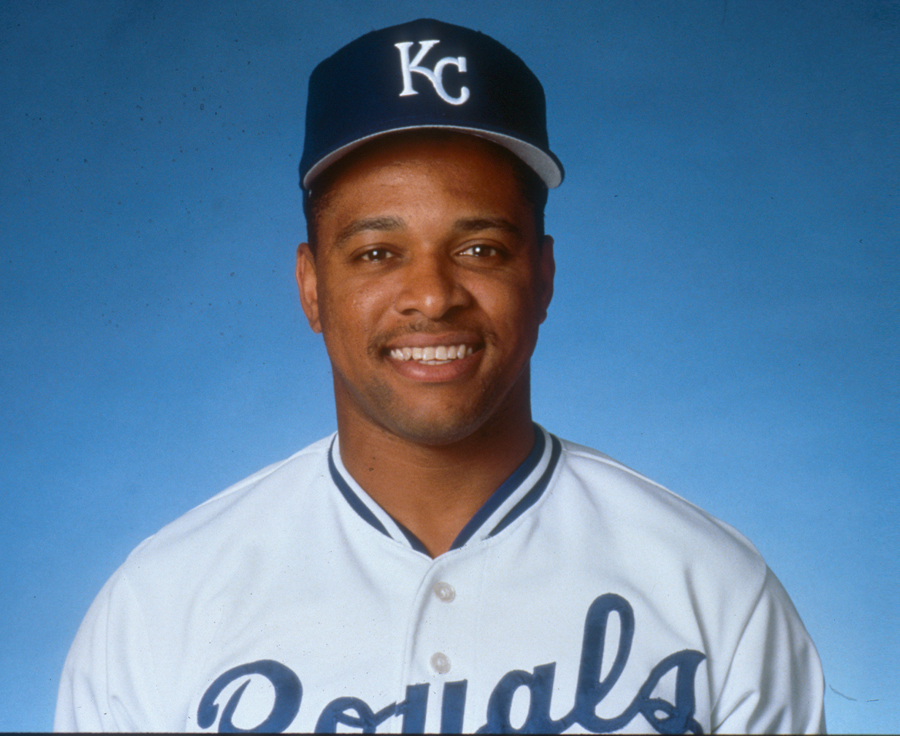
Danny Tartabull - Society for American Baseball Research

https://sabr.org/bioproj/person/danny-tartabull/

Danny TartabullFor several years baseball was very, very good to Danny Tartabull. The game gave him honors and recognition, though not quite as much as he thought he deserved. Baseball paid him millions of dollars, enabling him to live a luxurious life style that most people could barely imagine. But it wasn’t enough. He was unable or unwilling to support his youngest sons. His photograph had once graced the cover of Sports Illustrated for Kids. More recently it has appeared on Most Wanted posters in post offices throughout the state of California.
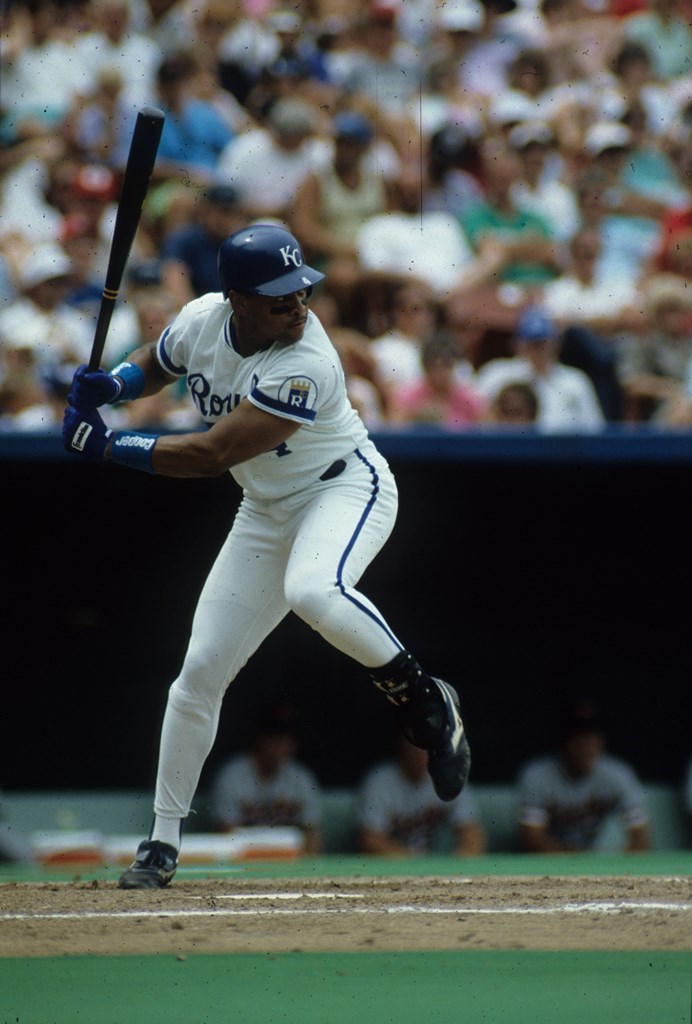
Danilo Tartabull Mora was born on October 30, 1962, in San Juan, Puerto Rico, a son of Antonia Maria Mora and José Milage Tartabull Guzman. His family had been prominent in Cuba until Batista was overthrown by Fidel Castro in 1959. Maria’s father had owned a sugar factory in Cienfuegos, José’s father was a college professor; his grandfather was a judge.1 Factory owners and supporters of the Batista regime did not fare well under the new order.

José Tartabull was a professional baseball player. After five years of semipro and minor-league experience, he made his major-league debut for the Kansas City Athletics a little more than six months before Danny was born. During the baseball season, the family lived wherever José’s club was based. They spent their winters in South Florida. Danny’s earliest memories were of romping in the ballpark in Winter Haven during spring training.

As the son of a ballplayer, Danny learned the game of baseball at a very early age. During the summer of 1967, the Tartabulls lived in Brookline, Massachusetts, while José played for the Boston Red Sox. There was a park near their residence, where José was often seen playing catch with his four-year-old son.2

The youngster developed his skills on the sandlots of Miami. “I grew up in baseball because of my father, not because of Miami,” he said. “I thought everybody’s dad went to the ballpark every day at 3 o’clock and played a game of baseball.”3 Danny didn’t just play baseball at 3 o’clock. Sometimes he played in three leagues at once. He could play a game in the morning, another after lunch, and a third in the evening. His teammates on one Little League team included José and Ozzie Canseco, Rafael Palmeiro, and Junior Valdespino. Who was the star? “I hate to say this,” he said, “but I was. I think my development was quicker because of being around the game more than all of them.”4

In 1978 15-year-old Danny played American Legion baseball in suburban Miami for Hialeah Post 32 and helped the club win the American Legion World Series. He played high-school ball for Miami’s Carol City High School. At age 17 he was selected, as a second baseman, out of high school by the Cincinnati Reds in the third round of the 1980 amateur draft.

The Reds sent Danny to Billings, Montana, in the Pioneer League. He hit .299 in 59 games for the Mustangs in 1980 and played mainly at third base (34 games), although he logged one game at second and 22 in the outfield. In 1981 Tartabull hit .310 for the Tampa Tarpons in the Class-A Florida State League, while playing 46 games at second base and 78 at third. He led the league in batting and doubles, was tied for fourth in home runs, and tied for third in triples and RBIs. He was named the circuit’s Player of the Year. Hal Keller, Seattle’s director of player personnel, was enthusiastic about the youngster. He told a reporter for The Sporting News, “I must have checked with a dozen people who saw this guy play and there was little doubt he could play in the big leagues. I think he’ll be a second baseman, but as a fallback, he has enough pop to be a legitimate third baseman.”5

In 1982 Tartabull hit a career-low .227 for the Waterbury Reds in the Double-A Eastern League, while playing exclusively at second base. That was his final season in the Cincinnati farm system, as the Seattle Mariners chose him on January 20, 1983, as a compensation pick after the loss of Floyd Bannister to free agency. At that time clubs could prevent the loss of players to the draft by putting them on a “protected list.” Years later, Cincinnati’s farm system director said the failure to protect Tartabull was the most regrettable decision the Reds had made in his quarter-century with the team.6

In 1983 the Mariners shipped Tartabull to Chattanooga, their affiliate in the Double-A Southern League. He hit .301 for the Lookouts and played the entire season at second base. The following year the Mariners promoted him to Salt Lake City in the Triple-A Pacific Coast League and switched him to shortstop He hit .304 for the Gulls, earning a late-season callup to the big leagues.

Tartabull made his major-league debut on September 7, 1984, at Royals Stadium in Kansas City. He was 21 years old, stood 6-feet-1, weighed 185 pounds, and batted and threw right-handed. He entered the game as a pinch-runner for Alvin Davis in the ninth inning of a 5-3 loss to the Royals. His next appearance came in Seattle’s Kingdome on September 11. The Mariners and the Texas Rangers were tied, 3-3, in the bottom of the ninth inning. The bases were loaded with two outs. Tartabull hit a game-winning RBI single. In his first major-league at-bat he had a walk-off hit.

On February 18, 1984, Danilo Tartabull and Monica Anita Cusseaux were married in Hillsborough County, Florida. In compliance with Florida law at the time, the race of the bride and groom was shown on the marriage certificate. Both were identified as “black.” The marriage lasted about 5½ years. The couple divorced in Pinellas County, Florida, on August 4, 1989.

In 1985 Tartabull played a few major-league games for Seattle, mainly at shortstop, but he spent most of the season with the Calgary Cannons, who had replaced Salt Lake City as the Mariners’ affiliate in the Pacific Coast League. What a season he had! He hit .300, scored 102 runs, and batted in 109, the first time he had topped the century mark in either category. He experienced a real power surge, blasting 43 home runs. In five previous seasons in professional baseball, Tartabull had never clouted more than 17 homers in a season. He ranked second in the league in runs scored, led in both home runs and runs batted in, and was named the league’s Most Valuable Player.

After that performance, Tartabull could no longer be kept down on the farm. He never returned to the minor leagues, playing 12 more years at the major-league level. In 1986 Tartabull hit .270 with 25 homers for the Mariners. He ranked fifth in voting for the American League Rookie of the Year Award. Although he had been primarily an infielder throughout his earlier career, Seattle converted him into an outfielder and he roamed the outer garden the rest of his career. On December 10, 1986, the Mariners traded Tartabull along with minor-league pitcher Rick Lueken to the Kansas City Royals for outfielder Mike Kingery and pitchers Scott Bankhead and Steve Shields. Many Seattle fans were stunned by the trade, as they envisioned the young power hitter as a possible superstar of the future.

Tartabull made an immediate impact in Kansas City. In 1987 he hit .309 with 34 home runs and 101 RBIs. The next year he hit .274 with 26 homers and 102 runs batted in. Those performances earned him a big boost in pay. In 1989 he received over a million dollars for the first time in his career. He got nice raises the next two seasons, even though his productivity fell off slightly. However, he came back in 1991 with one of his best years ever. He hit a career-high .316 with 31 home runs and 100 runs batted in. He led the league with a .593 slugging percentage. He was twice named the American League Player of the week, once in June and once in July. Tartabull was selected for the 1991 All-Star Game.

Despite his success at the plate, Tartabull was not universally popular among his teammates. Some Royals thought Tartabull had a bad attitude. He was regarded as aloof, arrogant, selfish, interested only in his own hitting, not a team player, and a lackadaisical outfielder. Some resented his ostentatious style of living. He certainly showed off his new-found wealth. One example was how he splurged on his proposal to his girlfriend, Kellie Van Kirk. One April night in 1989, he sent a limo to pick up Kellie, along with a dozen roses, and a note requesting that she wear his favorite dress and asking that she go with the driver to Wyandotte County Lake, just across the state line in Kansas. When she arrived, she found he was waiting for her in a rented tuxedo, accompanied by caterers and a harpist. A four-course meal with champagne was served, while the harpist played romantic music. After the meal Danny suggested they go for a walk up a nearby hill. When they reached the crest of the hill, they saw a fireworks display that spelled out in letters 25 feet high, “Kellie, will you marry me?” She said. “Yes.” Tartabull said, “I’ll get married, I’ll have kids, and I’ll have a lot of things happen in my life, but that was a night I’ll treasure as long as I live.”7 Little could he imagine the things that would happen in his life.

After the wedding, Kellie and Danny lived during the offseason in a lavish mansion in the Santa Monica Mountains near Malibu, California. The couch was made of Italian leather, the sound system was floor-to-ceiling, the works of art were well-chosen, the 300-gallon saltwater tank was filled with exotic fish, the wine cellar was stocked with expensive fine wines, including 50 bottles of 1985 Chateau Lafite Rothschild, valued at $450 each. “I enjoy making other people feel great,” he said. “I want to make my wife happy, and my kids happy, get them things they want.”8 In view of what happened later, how ironic were those words! In the garage were parked two luxury automobiles. The vanity license plates reflected the ego and talents of their owner: SLUGGER and I CAN HIT.

Danny TartabullTartabull professed to not know why some of the Kansas City players found him aloof and a poor teammate. He thought perhaps it was jealousy. “I don’t know where it came from, and I don’t waste my time trying to find out. It’s not true. I brush it off like dust.”9 Kellie said, “It bothers me more than Danny. I know he’s none of those things I hear about, not even close. He’s a family man, a person who enjoys having fun, going to nice restaurants. He always includes my whole family in the things we do.”10 Kellie accompanied Danny on every road trip. When he was with his wife, he wasn’t with his teammates, contributing to the feeling that he was aloof.

Tartabull thought the high opinion he had of himself was justified. “I’ve always felt I’m a great player. I am great. I know that in certain situations I can do things that a lot of other guys can’t,” he said. “Let’s say I do tell everyone that I’m great. What does that have to do with having a bad attitude?”11

At least one of Tartabull’s Kansas City teammates defended him. Brian McRae said, “Some people say he had a bad attitude. People think he is arrogant, but that’s just the way he is. Not everybody can be your normal run-of-the-mill person. He likes fancy cars, he likes dressing nice, he has a lot of nice jewelry. That might rub some people the wrong way, but that’s just Danny.12

Kansas City granted Tartabull free agency on October 28, 1991. Several clubs were interested in obtaining the services of the young star. During the early part of the recruiting process, the California Angels, Chicago White Sox, and the Texas Rangers appeared to the frontrunners. The White Sox dropped out of the bidding when Tartabull insisted on a five-year contract. Chicago general manager Ron Schueler said, “Five years is too long for me.”13

Tartabull had been the Angels’ primary target, but their ardor cooled when the club’s vice president, Whitey Herzog, became bitter about the way Tartabull’s agent, Dennis Gilbert, had behaved during earlier negotiations involving Bobby Bonilla. (Gilbert represented both Tartabull and Bonilla.) 14

Although they had not been mentioned among the early contenders, the New York Yankees made Tartabull an offer he couldn’t refuse. On January 6, 1992, he signed a five-year contract with the Yankees for $25.5 million, the most lucrative contract in club history to that point. He was guaranteed an additional $1.5 million in an endorsement clause that covered the life of the contract. “Texas and the Angels were both very attractive to me,” Tartabull said. “But the New York Yankees, man, they’re something else. How can you not get excited about that tradition? There’s a great mystique to it. Everyone and everybody would love to have that prestige.”15

Tartabull expected that playing for the Yankees would be a joyful experience, but fate deemed otherwise. He was hampered by injuries every year he was in pinstripes, never logging more than 138 games in a season for New York. Some Yankees officials thought, perhaps unfairly, that he should have played through his injuries.

At first Danny was thrilled at the opportunity to play in New York. He and Kellie purchased a home in Saddle River, New Jersey, within commuting distance of the city. When he signed with the Yankees, they had two children, Danica Janelle, 5, and Danny Jr., 4. Kellie was pregnant with their third child, Zachary, who would be born in Teaneck, New Jersey, on June 23. “New York is the greatest city in the world,” Tartabull said. “I can live here (in California) in the winter and play in New York during the season. It’s the ultimate.”16 In New York he and Kellie could attend the opera, see Broadway shows, and visit world-class art galleries. “You can’t do that in Kansas City or Seattle,” he said. “I’ve always been interested in culture. I like going to plays, my wife and I love the ballet, and we both love art. You can tell just walking through my house. We spend a lot of time in galleries.”17

The house in Malibu was nice, but Tartabull wanted bigger and better. He had some property in Rancho Santa Fe Farms in the San Diego area. He hired an architect and planned to spend $30 million to build an 11-room, 27,000-square-foot house next door to the home of pop star Janet Jackson. The house would feature a batting cage with a viewing platform, a saltwater aquarium, a scaled-down train to take the family or visitors on a tour of the estate, with stops at a game room, Tiki bar, basketball and tennis court, putting green, and an indoor/outdoor swimming pool, with a 14-foot waterfall, and a water slide descending from the children’s bedrooms. He planned to also have a sports training center, with an exercise room and a health bar, a two-story movie theater, a pinball and video arcade, and an aviary.18 How many of these plans actually came to fruition is not known.

Although he missed 39 games his first year in New York due to injuries (strained left hamstring, lower-back spasms), Tartabull was the Yankees’ most productive hitter with 25 home runs and 85 runs batted in. The next year he was even better with 31 homers and 102 RBIs. However, he was unable to match those figures again, and he never hit more than .266 in New York. He struck out more than 100 times each season he wore pinstripes, with his 156 K’s in 1993 being second highest in the league. Because of a shoulder injury, incurred when he was making a throw on July 15, Tartabull was unable to play in the field during the second half of the 1993 season, being restricted to the designated-hitter slot.

After the season Tartabull elected to have cosmetic facial surgery and then spend the first three weeks of November vacationing in Europe, delaying his shoulder surgery for more than a month. Dr. Frank Jobe performed the operation at Centinela Hospital in Inglewood, California.19 Some Yankee officials thought Tartabull should have given higher priority to the shoulder surgery.

In 1994 Tartabull played in only 104 games, mostly as a designated hitter. He hit .256, with 19 home runs and 67 RBIs. He appeared twice on the Seinfeld TV show and once on Married … With Children.

Unhappy with Tartabull’s attitude, the Yankees tried to trade him during spring training, 1995, but found no takers, even when they offered to eat as much as $2 million of his contract. On Opening Day the much-criticized slugger hit a homer and an RBI single. Yankees owner George Steinbrenner said, “I’m still disappointed in Tartabull. Very disappointed.”20

Upset by Steinbrenner’s criticism, in June Tartabull asked to be traded. He needn’t have bothered. The Yankees had been trying to unload him for months. “It’s easy for him to ask, but it’s not easy to move him,” general manager Gene Michael said. “Clubs don’t want to take that kind of money (Tartabull’s $5.3 million salary). I’ve tried to move him.”21

Disappointed with his performance, Yankee fans started booing Tartabull whenever he failed to deliver. Tartabull thought Steinbrenner encouraged the boos. The owner was famously hard to get along with, but Tartabull carried their feud to an extreme. His days in New York were numbered. The long-anticipated trade occurred on July 28, when the Yankees dealt the disgruntled slugger to the Oakland Athletics for veteran Ruben Sierra and minor-league pitcher Jason Beverlin. The Yankees sweetened the deal by agreeing to pay half of Tartabull’s salary. “I feel like I’ve been released from jail,” Tartabull said.22

With the deal completed, Tartabull was able to vent his bottled-up feelings. “It’s a zoo there. No I take that back; it’s a joke. The sad part is that the only reason for that is the owner. He wants to be the center of attention so bad he just destroys that team. It’s so hard for those guys to win because of that man. … The guys won’t say it on the record, but they’re just miserable there. … I’d still be there if it weren’t for George. I had no problems with anyone else, but when you’ve got an owner like him, he makes it impossible to play up to your capabilities. I mean why would an owner keep downgrading his own product? It’d be like Lee Iacocca telling people not to buy cars. That’s just stupid. He’s an idiot for doing that.”23

Tartabull played only 24 games for Oakland. On January 22, 1996, the A’s traded him to the Chicago White Sox for pitcher Andrew Lorraine and minor-league outfielder Charles Poe. The Sox had to pick up only half of his $5.3 million salary.

On January 31, 1996, Kellie gave birth to the family’s fourth child, Quentin Riley Tartabull. In 1996 Danny had a good season on the South Side of Chicago. Although he hit only .254, he clubbed 27 home runs and knocked in 101 runs. He became a free agent on November 18, and the Sox were willing to re-sign him only if he would accept a huge pay cut. He was unwilling to do so and went on the open market. Few clubs were interested in him. One exception was Philadelphia. Hal McRae, who had managed Tartabull one year in Kansas City, was now the Phillies hitting coach and lobbied on Danny’s behalf. Tartabull rejected the Phils’ first overture, saying he was insulted by the “lowball offer.”24 After months of negotiations and no better deals tendered, Tartabull signed with Philadelphia for $2 million on February 25, 1997.

On Opening Day, April 1, 1997, Tartabull was in the Phils’ starting lineup, playing right field and batting cleanup in a game at Dodger Stadium. During the game he fouled a pitch off his left foot. He was removed from the game and sat out the next three contests, thinking he had a contusion. He was back in the lineup for the games in San Francisco on April 5 and 7. He was unable to complete the latter game and was taken out in favor of Derrick May in the seventh inning. He didn’t know it at the time, but his major-league career was over at the age of 34. An MRI revealed that his foot was fractured, and he would be out for the season. For their $2 million investment, the Phils got virtually nothing in return. Tartabull drew four bases on balls and scored two runs, but he made no hits in his seven official trips to the plate.

The Phillies declined to renew his contract, and Tartabull opted for free agency on October 10, 1997. He worked out during the winter, getting himself in shape, and hoping for a return to the big leagues. The San Diego Padres offered him a minor-league contract, but he turned it down. His baseball career was over. He returned to California, and stayed out of the limelight for a few years.

The next time Tartabull was in the national news involved family problems. He and Kellie split up around 2007, and a family court judge ordered Danny to pay child support for the two youngest children, Zach and Quentin. (Having passed the age of 18, neither Danica nor Danny Jr. was entitled to support.) Both boys were star football players, Zach at Valencia High School and Quentin at Bishop Alemany High School in Mission Hills. Zach graduated from high school in 2010 and became a male model. Quentin graduated in 2014 and accepted a football scholarship at the University of California, Berkeley.

Tartabull fell far behind on his child-support payments. On January 24, 2011, he entered a no-contest plea to charges that he willfully disobeyed the court order.25 Zach had already reached the status of “emancipation” and Quentin would soon join him in that category. Danny would not be liable for child support in the future, but he was liable for payments missed in the past, amounting to $276,204.93. Tartabull was placed on probation, but he violated the terms of the probation. On May 2, 2012, he was sentenced to 180 days in the Los Angeles County jail. He failed to report to jail, and the court issued a warrant for his arrest with bail set at $200,000. When authorities were unable to locate him, he was declared a fugitive from justice.26

If anyone knew where Danny was hiding out, they were not talking. “Most Wanted” posters went up in California post offices in July 2013. It took four years before police found him — after Tartabull himself called to report that his car had been broken into. Police ran his name through the system and finally arrested him.27

When Danny Tartabull was a baseball star, he was called “The Bull.” Now he is called a “deadbeat dad.”

Last revised: August 1, 2017


This biography originally appeared in “Puerto Rico and Baseball: 60 Biographies” (SABR, 2017), edited by Bill Nowlin and Edwin Fernández. It also appears in “Kansas City Royals: A Royal Tradition” (SABR, 2019), edited by Bill Nowlin.


Notes

1 Joanne Hulbert, “Jose Tartabull,” https://sabr.org/bioproj/person,54213446.

2 Ibid.

3 Craig Davis, “Yanks’ Danny Tartabull Has $25.5 Million, Wants More: A World Series Paycheck,” Sun-Sentinel (Fort Lauderdale, Florida), April 5, 1992.

4 Ibid.

5 Tracy Ringolsby, “No-Trade Clauses Create Contract Woes,” The Sporting News, January 31, 1983.

6 Mike Bass, “Cincinnati Reds,” The Sporting News, January 20, 1992.

7 “Best of Plans Made for Night to Remember,” Los Angeles Times, April 29, 1989; Bruce Newman, “Bright Light, New City,” Sports Illustrated, March 23, 1992: 76.

8 Michael Martinez, “Bronx Is Up, but Tartabull Will Take Manhattan,” New York Times, February 6, 1992.

9 Ibid.

10 Ibid.

11 Newman.

12 Ibid.

13 Joe Goddard, “Chicago White Sox,” The Sporting News, January 13, 1992.

14 Dave Cunningham, “California Angels,” The Sporting News, January 6, 1992.

15 Moss Klein, “Yanks Give Tartabull a Record Number,” The Sporting News, January 13, 1992.

16 Martinez.

17 Ibid.

18 “Yanks’ Danny Tartabull Building a $30 Million House in California,” Jet, May 11, 1992: 48.

19 Jack Curry, “Tartabull Has Operation Yanks Preferred,” New York Times, December 1, 1993.

20 Jon Heyman, “New York Yankees,” The Sporting News, May 22, 1995.

21 Jon Heyman, “New York Yankees,” The Sporting News, June 19, 1995.

22 Bob Nightengale, “Tartabull Loves New York but Loathes Steinbrenner,” The Sporting News, August 7, 1995.

23 Ibid.

24 https://cornerpubsports.com/2015/06/phillies-all-train-wreck-team.

25 Sam Gardner, “Call him Deadbeat Danny Tartabull.” foxsports.com/mlb/story/danny-tartabull-former-mlb-allstar-shows-up-atop-deadbeat-dad-list-n-la, July 9, 2013.

26 Ibid.

27 Pete Grathoff, “Ex-Royal Danny Tartabull forgets he’s a fugitive, calls police and is arrested,” Kansas City Star, July 28, 2017, https://www.kansascity.com/sports/spt-columns-blogs/for-petes-sake/article163946127.html

Society for American Baseball Research

https://sabr.org/bioproj/person/kevin-appier/

Kevin AppierRight–handed pitcher Kevin Appier, who played 16 major–league seasons (1989–2004), was one of the best starters of his generation. He was the rare hard–throwing pitcher who developed an array of elite secondary pitches to complement his fastball. Appier’s slider and forkball were notoriously devastating, enabling him to remain a top–notch starter even after a series of injuries took away his high–octane fastball.

Appier won 169 games in his career against 137 losses with a 3.74 ERA, a notably strong mark for a pitcher who spent the latter half of his career competing in the “Steroids Era.” “Ape,” as he was nicknamed, pitched for four major–league clubs. He spent the vast majority of his career with the Kansas City Royals (1989–1999, 2003–2004). As of 2018 he was the franchise’s career leader in strikeouts (1,458) and fourth in wins for the Royals (115). Appier spent his other major–league stints with the Oakland Athletics (1999–2000), New York Mets (2001), and Anaheim Angels (2002–2003) before returning to the Royals to wind up his career. He was selected for the 1995 All–Star Game, finished third in AL Rookie of the Year voting in 1990, and third in AL Cy Young Award voting in 1993. In 2002 Appier earned a World Series ring as a member of the Anaheim Angels. In 2011, he was inducted into the Kansas City Royals Hall of Fame.1

Robert Kevin Appier was born on December 6, 1967, in Lancaster, California, in Los Angeles County. He was one of three siblings and was raised by his mother, Betty Appier, who worked as an accountant.2 Appier starred for the Antelope Valley High School baseball team, a perennial LA County baseball power that had previously produced 1966 number–one draft pick Steve Chilcott and former Brewers, Tigers, and Angels pitcher Jim Slaton (1971–1986). By the end of his high–school career, Appier had grown into the 6–foot–2, 180–pound frame that he carried for the rest of his career.3 He accepted a scholarship to play at collegiate power Fresno State but left the Bulldog program after just three appearances in 1986 and spent the 1987 baseball season with the Antelope Valley College Marauders. “He’s a once–in–a–lifetime coach’s dream,” Antelope Valley College coach Ted Henkel told the Los Angeles Times. Henkel worked closely with Appier, helping him beef up his fastball into the 90s. After Appier posted an 11–6 record with a 2.65 ERA for the Marauders, Kansas City selected him in the first round of the 1987 draft and he signed with the Royals shortly thereafter.4

Appier progressed quickly through the Royals organization. In 1987, he posted a 3.04 ERA for the Eugene Emeralds of the Single–A Northwest League. He split 1988 between the Class–A Baseball City Royals of the Florida State League and Double–A Memphis Chicks of the Southern League. Appier won a combined 12 games against 9 losses and posted a 2.64 ERA. He spent most of 1989 with the Omaha Royals of the Triple–A American Association, where he went 8–8 with a 3.95 ERA. Appier had a brief stint with the Royals in June and July 1989 but struggled to a 1–4 record with an ERA of 9.14 in six appearances.5

After a brief stay in Omaha in 1990, the Royals called Appier up and eased the 22–year–old back into major–league action. In late April and May, Appier worked primarily as a reliever. By early June, Appier had moved into the Royals’ highly talented starting rotation which included two–time Cy Young Award winner Bret Saberhagen, Mark Gubicza, Tom Gordon, and Storm Davis. Appier proved to be a bright spot in an otherwise disappointing 1990 season for the Royals, who finished sixth in the AL West after being the runners–up to Oakland the previous season. The rookie right–hander ended up having the standout season among Kansas City’s rotation, posting a 12–8 mark and a staff–best 2.76 ERA. He finished third in Rookie of the Year voting behind Yankees slugger Kevin Maas and Indians catcher Sandy Alomar Jr., the unanimous selection of the Baseball Writers Association of America. The Sporting News named Appier its 1990 Rookie Pitcher of the Year.

Appier avoided a sophomore slump, posting a 13–10 record with a 3.42 ERA with three shutouts in 1991. While the Hal McRae–managed Royals faded into oblivion in 1992, finishing tied for fifth and winning just 72 games, the third–year pitcher asserted himself as the ace of the mound staff. With the departure of Bret Saberhagen in a trade to the New York Mets, Appier took the lead in Kansas City’s suddenly–slim starting pitching staff. He made the first of his six consecutive Opening Day starts for the Royals. For the season he went 15–8 and posted a 2.46 ERA, second best in the AL behind Boston’s Roger Clemens. In July Appier earned the AL Pitcher of the Month Award, finishing the month 4–0 with a 1.55 ERA in six starts. Despite the strong pitching performance, Appier was once again left off the AL All–Star team roster, a victim of his team’s poor performance.

In 1993 Appier asserted his claim to recognition as one of the AL’s best pitchers. Pitching a career–high 238⅔ innings, he posted a career best 18–8 record and an AL leading 2.56 ERA. He finished a career–best third in AL Cy Young Award voting behind winner Jack McDowell and distant runner–up Randy Johnson.

Appier fell from the heights of 1993 during the strike–shortened 1994 season, struggling to stay above .500 as his ERA jumped more than a run to 3.83. As a franchise, the Royals had returned to form, boasting a 64–51 mark, good for third place in the new, highly competitive AL Central Division. David Cone, who went 16–5 with a 2.94 ERA, was the ace of Hal McRae’s rotation in 1994 but was traded to Toronto for three prospects by the cash–strapped Royals before the start of the 1995 season.

Appier bounced back in 1995, retaking his position as Kansas City’s ace. He won 11 of his first 13 decisions. The 27–year–old earned his only All–Star Game selection that season and pitched two perfect innings in relief of Randy Johnson. After his fantastic start to the  season, Appier faded in the second half. His record fell to 15–10 and his ERA ballooned to 3.89.6

As offense ballooned during the latter half of the 1990s, Appier remained a strong, if somewhat less spectacular starter, on Bob Boone’s noncontending Royals teams of 1996 and 1997. The right–hander’s ERA hovered in the mid–3’s both seasons (3.62 in 1996 and 3.40 in 1997), though his won–lost records differed considerably (14–11 in 1996 and 9–13 in 1997). Appier put significant mileage on his arm both seasons, throwing a combined 447 innings. Before the 1996 season, Appier entered salary arbitration with the Royals, winning a salary increase to just over $5 million per season, a jump of more than $663,000 from the season before.7

In 1998 Appier faced his first significant injury as a pitcher, suffering a torn labrum in spring training that cost him virtually the entire season. He made just three September appearances. He also battled through a difficult first half of the 1999 season, compiling a 9–9 record with a then career–worst 4.87 ERA through the end of July. At the trading deadline, the rebuilding Royals shipped their longtime ace to the suddenly contending Oakland A’s for pitchers Jeff D’Amico, Blake Stein, and Brad Rigby. Appier continued to win games but his ERA ballooned further against steroids–era hitting. He finished the year 16–14 with an ERA of 5.17. The A’s finished the season eight games behind the AL West Champion Texas Rangers and seven games behind the Red Sox for the wild card.

In 2000, Appier, 32, played a prominent role in the “Moneyball” A’s ascent to the franchise’s first division title since 1992. He went 15–11 while posting an ERA of 4.52. He provided veteran leadership on a young staff that included Tim Hudson, who had his breakout season in 2000, and Barry Zito, who was on the cusp of greatness. Appier made his first–ever playoff appearances in the Division Series against the New York Yankees. He pitched in two games in the hard–fought series that was won by New York, three games to two. In Game Two, Appier surrendered three runs in 6⅓ innings in a 4–0 home loss. Appier gave up one run in four innings of relief in the deciding fifth game.

On December 11, 2000, the Mets signed Appier to a four–year, $42 million contract, bringing the veteran right–hander onto the staff of the defending NL champions. Appier posted an 11–10 record in 2001 with a 3.57 ERA in 206⅔ innings pitched. The addition of Appier did not prove to be the final piece in the Mets’ World Series–winning puzzle. The club struggled to an 82–80 mark in 2001, finishing third in the NL East. After the season, the Mets traded Appier to the Anaheim Angels for former AL MVP Moe Vaughn.8

Appier proved a stalwart on the Angels’ young staff, posting a 14–12 mark and a 3.92 ERA for the 99–win wild–card–winning club. Though Appier struggled during the 2002 postseason, surrendering 15 earned runs in 21⅔ innings of work, the Angels upset the Yankees, Twins, and Giants en route to the franchise’s first World Series victory.

In 2003 Appier struggled along with the Angels in their World Series hangover season. A series of nagging injuries, most notably a torn flexor tendon in his right elbow, hampered him throughout the season. He went 7–7 with an ERA of 5.63 for the 77–win Anaheim team, and was released on July 30. A week later Appier returned to the Royals. He made just four starts for Kansas City before having season–ending surgery. He missed most of 2004 recovering from elbow surgery, making just two starts that season. Appier struggled for the next two years (2005–2006) to make a major–league comeback, first with the Royals and then with the Seattle Mariners. In 2006 he retired as a Royal, more than two years after his final major–league appearance.9

Appier was a right–handed hitter who rarely batted. In a career spent primarily in the AL, Appier had 90 career plate appearances, 67 of which came during his season with the New York Mets. He posted a .096 career batting average.

In retirement, Appier moved full time to his soybean farm in Paola, Kansas, about 45 miles south of Kansas City. He and his wife, Laurie, have three children: Garrett, Britney, and Evelyn. Garrett Appier is a three–time Division II national champion in the shot–put for Pittsburg State University in Kansas.10

Notes

1 Dick Kaegel, “Appier to Take Place Among Royals Greats,” Royals.com, June 24, 2011. Accessed on July 2, 2018: wap.mlb.com/kc/news/article/2011062420940432/?locale=en_US; “NY is Appier of Eye,” New York Daily News, December 12, 2000. Accessed on July 2, 2018: nydailynews.com/archives/sports/n–y–appier–eye–article–1.885307.

2 Gene Morris, “Appier Inducted into Royals Hall of Fame,” Miami County (Kansas) Republic, June 30, 2011. Accessed on July 2, 2018: republic–online.com/news/appier–inducted–into–royals–hall–of–fame/article_78a46445–9d5b–5ede–a39b–4f9ee9e50495.html; “Kevin Appier,” Biographical Dictionary of American Sports, 2000. Accessed on July 2, 2018: books.google.com/books?id=AUFUw01sIWYC&pg=PA34&lpg=PA34&dq=betty+appier&source=bl&ots=fASRBhF0my&sig=mrtEkP4e–HOuuUNkeKSLJj1lT7c&hl=en&sa=X&ved=0ahUKEwiso4iN8YXcAhXGrVkKHdMyD9kQ6AEIMzAC#v=onepage&q=betty%20appier&f=false.

3 “Antelope Valley High,” The Baseball Cube, 2013. Accessed on July 2, 2018: thebaseballcube.com/hs/profile.asp?ID=1070.

4 Theresa Munoz, “Ape’s World: Kansas City Pitcher’s Unorthodox Formula for Success Results in Winning Equation,” Los Angeles Times, July 16, 1992. Accessed on July 2, 2018: articles.latimes.com/1992–07–16/sports/sp–3738_1_kansas–city–royals/2.

5 Ibid.

6 Tim Kurkjian, “A Royal Start,” Sports Illustrated, May 15, 1995: 81; Mike DiGiovanna, “NL Wins Battle of Homeric Proportions,” Los Angeles Times, July 12, 1995. Accessed on July 2, 2018: articles.latimes.com/1995–07–12/sports/sp–31290_1_homer–in–all–star–game.

7 “Royals’ Appier Tops $5 Million,” New York Times, February 3, 1996: 33.

8 Ben Walker, “Kevin Appier Signs with the Mets,” ABC News, December 11, 2000. Accessed on July 2, 2018: abcnews.go.com/Sports/story?id=100096&page=1.

9 Gregg Bell, “After Two Year Absence, Appier Looking for Way Back,” Lawrence (Kansas) Journal–World, April 21, 2006. Accessed on July 2, 2018: 2.ljworld.com/news/2006/apr/21/after_twoyear_absence_appier_looking_way_back/.

10 Dick Kaegel, “Appier to Take Place Among Royals Greats.”; Adam Burns, “Appier Returns from Injury After Contemplating Retirement,” Joplin (Missouri) Globe, January 24, 2018. Accessed on July 2, 2018: joplinglobe.com/sports/local_sports/appier–returns–from–injury–after–contemplating–retirement/article_d46acf4d–605c–5b07–8083–6c0b19f36f81.html.

Kevin McReynolds

https://sabr.org/bioproj/person/kevin-mcreynolds/

The quiet man — a perfect description of Kevin McReynolds. He played with some of the most vocal players in the game during his career and yet rarely made the news like many of his teammates. McReynolds maintained his easygoing, quiet demeanor throughout his playing days, letting his bat and glove do the talking for him.

Walter Kevin McReynolds was born on October 16, 1959 in Little Rock, Arkansas. Raymond, McReynolds’s father, served in the U.S. Army as a mechanic. Walter and his family lived on Camp Robinson, an Arkansas National Guard base, when he was growing up. McReynolds’s mother Kathryn stayed at home to take care of her four children, three sons and a daughter. Her son always speaks fondly and proudly of the upbringing that he received from his parents. He grew up in meagre circumstances. He described his parents’ house as “modest, almost shack-like. It wasn’t much. There was a little kitchen and a little living room and a little hall and a bathroom and three small bedrooms. It wasn’t very big at all, but it was very comfortable.”1

McReynolds was the middle of three brothers, sandwiched between the older Randy and the younger Terry. He also had a sister, “and our parents taught us to treat people decently. Treat them like human beings,” he said when was asked his parents’ influence on his life.2

He learned his love of baseball from his father Raymond. His dad served in World War II, but before he entered the service, he had been a decent ballplayer. McReynolds’s father wasn’t known as a power hitter in rural Arkansas but people did recognize him as a talented player. Unfortunately, there were no organized leagues in which to hone his skills.3

Kevin, however, began playing organized baseball in junior high school and was such a good athlete that the school’s football coach told him he couldn’t play both baseball and football. McReynolds balked at this and told the coach that if he couldn’t play baseball, he wouldn’t play football either. Coach eventually relented.

McReynolds played baseball at Sylvan Hills High School in Sherwood, Arkansas. He became a leader on his high school team and one of the best high school players in the state. He hit .638 with 15 home runs and 60 RBIs during the first 25 games of his senior year. In 1978, he led the Sylvan Hills Bears team to the Arkansas Class AAA State Baseball Championship and was the tournament MVP. McReynolds was also named Arkansas High School Baseball Player of the Year that year. Many years later, in 2011, McReynolds was also inducted into the National High School Hall of Fame.4

He also met his future wife, Jackie, during his high school years. The two eventually married in 1988. They have two daughters. McReynolds and his family have continued to live in Arkansas. During the off-seasons, he would return home and spend his time hunting, one of his lifelong passions.

Although the Milwaukee Brewers picked McReynolds in the 19th round of the 1978 MLB amateur draft, he chose instead to go to school and play for University of Arkansas. It wasn’t a difficult decision. “I didn’t come from a wealthy family, and [the Brewers] offered no money,” said McReynolds.

As a freshman in 1979, McReynolds hit .282 with eight home runs and 37 RBIs while starting in the Razorbacks outfield. The team reached the College World Series that season. McReynolds hit .566 with two home runs and five RBIs as Arkansas came up a run shy of winning the national title against Cal State-Fullerton. The youngster continued to improve during his sophomore and junior years, earning All-America and All-Southwest Conference honors in both years, as well as being named MVP of the 1980 Southwest Conference Tournament. He finished his college years with a batting average of .337, 33 homers and 121 RBIs, not to mention a career slugging percentage of .642, third best in school history.

“’I think I really got myself on the board when I was a freshman and played in the College World Series. A lot of scouts were there, following us around,” he said. McReynolds had not been a secret to MLB. The San Diego Padres drafted him as the sixth pick in the first round of the 1981 MLB June amateur draft.5

Shortly before being drafted by the Padres in the summer of 1981, McReynolds injured a ligament in his leg in a collision at home plate. The injury, which required surgery to fix, kept him from playing that season while the knee was mending.

McReynolds started the 1982 season with the Class A Reno Padres of the California League. He hit .376 with 28 home runs and 98 RBIs in 90 games with Reno. The Padres moved him up to the double-A Amarillo Gold Sox (Texas League) for the final part of the season, where he continued to pound out the hits against the stiffer competition. He played 40 games at Amarillo and had five home runs and 39 RBIs.

Impressed, the Padres sent McReynolds to their Class AAA team, the Las Vegas Stars (PCL), in 1983. His offensive production continued apace at the higher level: he knocked out 32 homers and collected 116 RBIs. After spending most of the season with Las Vegas, the Padres called him up for good at the end of the season. McReynolds played 39 games for the Padres at the end of the season, hitting four home runs and getting 14 RBIs. He had actually spent the early part of the season with the Padres and made his major league debut on June 2, 1983. He started in center field against the Phillies and in his fourth major-league at-bat, McReynolds hit a solo home run to help the Padres win 4-1.

McReynolds had arrived. He became one of the starting outfielders for San Diego in 1984. During the offseason, the Padres had traded for Carmelo Martinez, Al Newman and Craig Lefferts as part of a three-team five-player deal with the Chicago Cubs and Montreal Expos. When the season started, McReynolds and Martinez made up one of the youngest and most promising outfields in the game. They were known as the M & M boys after the duo of Roger Maris and Mickey Mantle back in 1961.

Although McReynolds claimed that he embarrassed himself when he was called up to the Padres the previous year, he showed that he was serious about improving when he set a Padre record with seven home runs during spring training, an encouraging start. “I think the fans will get a lot more excitement out of Carmelo and me this year,” he said on opening day.6

McReynolds played in 147 games that year in center field, finishing the season with a .278 batting average along with 20 home runs, which tied Graig Nettles for the team lead, and 75 RBIs, second behind Steve Garvey. At the end of the season, McReynolds finished 17th in the voting for the National League MVP.

The team itself had done quite well. The Padres played the Chicago Cubs for the 1984 National League championship. McReynolds had a great NLCS through the first four games, batting .300 with a home run and four RBIs, but he broke his wrist trying to break up a double play in the bottom of the sixth inning in Game Four and was done for the season.

Even worse, he missed the World Series. “I don’t want to put myself through the strain of imagining how I’d play a ball in center.  Or what I’d do at the plate. All I can do is cheer,” he said when the World Series started. And he didn’t get to do much of that. The Padres lost to the Detroit Tigers four games to one. It would be the only time that McReynolds would make it to the World Series in his career.7

McReynolds returned to center field for the Padres in 1985 and continued to be one of the team’s offensive leaders. His 15 home runs were third-best on the team and his 75 RBIs were second only to Garvey. McReynolds anchored the outfield that season. He continued to improve in 1986 as his batting average jumped 54 points — to .288 — and he achieved his career best OPS of .862. McReynolds’s 26 home runs and 96 RBIs led the team, and he played all but four games for San Diego. Only Tony Gwynn played more.

Jack McKeon, general manager of the Padres traded McReynolds to the New York Mets on December 11, 1986 as part of multi-player deal. McReynolds along with minor-leaguer Adam Ging and Gene Walter were traded for minor leaguers Kevin Armstrong and Kevin Brown as well as Shawn Abner, Stan Jefferson and Kevin Mitchell. “We got the guy we need. Immediately we are a lot stronger than we were. I would hope that our third, fourth, fifth and sixth hitters are now the best in baseball. And we have the protection for Darryl Strawberry that we were looking for,” said Mets manager Davey Johnson.8

McReynolds was involved in an unusual, and historical, incident early in the 1987 season when the Braves Dion James fly ball hit and killed a dove minding his own business in the air above left field. Baseball and bird both fell in front of a startled McReynolds. He fielded the ball, but James still ended up with a double. It was the first, and still the only time in MLB history that a bird has been killed by a baseball during an official game, although it has happened more than once.9

After McReynolds arrived in New York, he moved to left field since the Mets already had a regular centerfielder in Mookie Wilson. But the change had little impact on his defensive performance as he finished with a .987 fielding percentage in 1987.

Mets fans quickly recognized him as quiet and even tempered, which stood out on a team filled with lots of more flashy personalities. He said that he may not have been appreciated in San Diego because of his quiet nature. “I think it’s possible the front office in San Diego didn’t know what kind of player I was. I have a fluid motion that makes it seem like I’m loafing.”10

He continued to produce offensively after his arrival in New York. McReynolds became one of the anchors of the Mets lineup. His 29 home runs and 95 RBIs were third best for the Mets behind Strawberry and Howard Johnson.

McReynolds had his best season in 1988. The left fielder hit .288 with 27 home runs and 99 RBIs that season, finishing second on the Mets behind Strawberry. McReynolds performance earned him enough votes to finish third in the voting for MVP. He also recorded 21 stolen bases without being caught stealing to set the then NL Record. His mark was finally broken by Carlos Beltran in 2004.11

The Mets returned to the playoffs in 1988, and McReynolds made his second appearance in the postseason. He had two home runs and four RBIs for the Mets who eventually lost to the Dodgers in seven games. In the first game of the series, McReynolds risked injury when he had to slide past Mike Sciosia as he raced for home plate. “I was pretty much zeroed in on him. I didn’t make the choice. He made the choice for me by where he was standing,” he said later.12

The New York sportswriters, who were always looking for a story, wryly noted McReynolds’s reticence. As Jim Murray wrote in the Los Angeles Times that year: “It’s not that New York intimidates him. The big city. For him, Tulsa is a big city. Or his native Little Rock. Nor is he a ‘Yup,’ ‘Nope’ type. Kevin will talk, but you better hurry. Your best bet is on the way to the shower. He holds the team record for in and out after a game.”13

When the season ended, McReynolds signed a new three-year contract with the Mets. It was, at the time, the most the team had ever given a player in their history. At the time, it was not money but language that held up the contract. McReynolds wanted insurance that his contract would be guaranteed if there was a lockout in 1990. The Mets also agreed to help him finance his duck hunting club venture in Arkansas as part of his contract.14

Over the next two years McReynolds earned his keep and gave the Mets confidence that his signing hadn’t been  a mistake. In 1989, he hit .272 with 22 home runs and 85 RBIs. while batting .272. The following year he knocked out 24 homers and 82 RBIs as his batting average remained basically unchanged at .269. Both years, he quietly produced in the shadow of his more vocal teammates such as Strawberry and Dwight Gooden.

The Mets rewarded his efforts with a new $10 million contract before the 1991 season. Al Harazin, the Mets general manager, explained why the Mets were anxious to have McReynolds signed: “New York is preoccupied with style. Kevin would be the first to admit he is not preoccupied with style. That’s O.K. with us. We’re concerned with substance and that’s what he’s all about. I think he’s as intense a player as we have on our ball club.”15

But McReynolds’s productivity dropped in 1991; he finished the season with just 16 home runs and 74 RBIs. Not only that, but he got caught stealing the paltry half-dozen times he tried that year. At one point, the new Mets manager Bud Harrelson switched McReynolds and Hubie Brooks in the outfield. Neither play felt comfortable with the switch, and Harrelson quickly reversed it.

Position switching didn’t work, nor did much of anything else for McReynolds in 1991. He struggled again at the plate early in the season, and the Mets fans booed him roundly. He finally spoke out in May about the heckling and his frustration. “People here like to kick someone when they’re down,” he said. “[Y]ou more or less expect that in New York. I think a lot of people would like to see me fail.” Meanwhile the Mets dropped to fifth place in their division, and the New York media continued blasting McReynolds for his lack of performance. Joe Sexton in the Times summed up the near-universal complaint: “McReynolds, as often as not in the cleanup slot in the order, never generated the power numbers expected of him.”16

After this disappointing season, the Mets traded McReynolds to the Kansas City Royals on December 12, 1991. The trade sent McReynolds, Gregg Jefferies and Keith Miller to Kansas City for Bill Pecota and Bret Saberhagen. At the time, the Mets were concerned about their pitching staff and hoped that Saberhagen, a two-time Cy Young Award winner, would strengthen their rotation. Although primarily interested in Jefferies, the Royals hoped McReynolds would add some punch to their lineup. He was going to play regularly. Upon learning of the trade, Royals manager Hal McRae observed: “If [Jefferies] plays third, McReynolds will play right, with Kirk Gibson in left. If [Jefferies] plays left, Kevin Seitzer will go back to third, with McReynolds in right.”17

McReynolds was now playing much closer to his home in Arkansas, but that didn’t improve his performance. The early weeks of the 1992 season went much like the previous year’s start. The Royals went 3-17 in April. “We deserved to be booed with that start,” he admitted, “but the fans stayed loyal to us the whole time. I’m glad we didn’t go through that [losing streak] in New York.” At the time, McReynolds, whom the Royals hoped would provide some power, had one home run, two RBIs and was hitting just .150.18

McReynolds played in 109 games for the Royals in 1992, the fewest since he become a full time player in 1984. His batting average continued to drop and he hit only 13 home runs and garnered 49 RBIs. He continued to be the Royals primary left fielder in 1993 and his productivity remained pretty much static, although for the first time since way early in his career, his park-adjusted OPS (OPS+) fell below 100.

After two years with the Royals, the team traded McReynolds back to the  Mets in January 5, 1994, for Vince Coleman and cash. The Mets had been trying to unload Coleman, who had been a problem on and off the field for them during his three years with the team. McIlvaine, the Mets general manager spoke positively about his addition to the team. “This is a trade to help us be competitive right now in 1994 and hopefully beyond. [McReynolds] plays hard, he plays hurt, and he lets his glove and his bat do the talking.19

McReynolds had not had a particularly satisfying time in Kansas City. Plagued by injuries during his time with the Royals, he had also feuded with his manager. He welcomed the return to the National League, to grass fields, and to the Mets. “I think that a change of scenery will probably help me. And hopefully my performance dictates that I’m going to be in there every day.”20

As he prepared for the media glare that would come with his return to New York, McReynolds acknowledged that his emotionless approach to the game and outwardly casual attitude had not pleased many of the Mets fans. “People say I have a lackadaisical, lazy attitude and I’m sorry they feel that way. But I’m not going to beat my head up against a wall trying to change it.”21

When McReynolds returned to New York, the Mets were rebuilding their team. They hoped that McReynolds would bring some punch to their lineup as he platooned in left field with their younger players. Unfortunately, McReynolds’s back problems cost him time on the DL during the season.

But he was producing only rarely that season. After a solid game at the plate on June 12, 1994, hitting two home runs against the Expos, Mets manager Dallas Green said “That’s the kind of game we’ve been wanting out of him. He’s worked hard to get where he is, but he hasn’t really given us that kind of game all year.” McReynolds had few games like that in 1994 and ended up appearing in just 51 of them. He batted .256 with four home runs and 21 RBIs.22

The Mets cut him loose and granted him free agency on October 25, 1994, at which point McReynolds decided to retire from baseball. “I’m ready to turn the page. I’ve been playing since I was 5 years old, and I never sat on the bench. I don’t want to start at 35,” he said.23

Since his retirement, McReynolds has lived in Arkansas with his wife and family. He has been involved in several business ventures such as partnering as a restaurant owner with long-time friends. As of this writing, he was investing most of his energies in his duck hunting club, which he had purchased after his first big contract with the Mets.

“It’s been on my time [now], that’s what it’s been. The last couple of years when I was playing, I purchased a commercial duck hunting club down here in Dewitt, Arkansas called the Double Deuce [a reference to his most frequent uniform number, 22]. I spend a good amount of time down there.” McReynolds’s duck club allows him to indulge his lifelong passion for hunting, which he had always enjoyed on the off-seasons when he was a player.24

He looks back on his big league career fondly, feeling fortunate to have played with several Hall of Famers during his career. “I was really lucky. I got to start my career with Tony Gwynn, and I played with guys like Goose Gossage, Graig Nettles. These guys were legends to me growing up that I got to play with. Steve Garvey, George Brett in Kansas City . . . legends.”25

Last revised: July 1, 2022 (zp)


Acknowledgments

This biography was reviewed by Tom Schott and fact-checked by Stephen Glotfelty.


Sources

In addition to the sources cited in the Notes, I also used Baseball-Reference.com, Baseball-Almanac.com, and Retrosheet.org websites for player, team, and season pages, and other pertinent material.


Notes

1 Tom Friend, “Why Success Won’t Change McReynolds,” Los Angeles Times, April 5, 1985.

2 Joseph Durso, “Silent McReynolds Lets Actions Speak for Mets,” New York Times, August 21, 1988.

3 Friend, “Why Success Won’t Change McReynolds.”

4 Andrew Hutchinson, “Razorback Rushmore: Greatest Diamond Hogs of All-Time,” HawgBeat.com, May 22, 2018.

5 Durso, “Silent McReynolds.”

6 Steve Wulf, “The Beast Team in Baseball,” Sports Illustrated, April 16, 1984.

7 Ken Denlinger, “McReynolds Sits One Out,” Washington Post, October 12, 1984.

8 Joseph Durso, “Mets Trade Five for McReynolds in Eight-Man Deal, New York Times, December 12, 1986.

9 “This Flight Pattern Too Low at Shea,” New York Times, April 13, 1987. See also Michelle Berthiaume, The Equinox, “MLB Players that Have Killed a Bird During a Game,” accessed September 16, 2018, http://kscequinox.com/2012/09/mlb-players-that-have-killed-a-bird-during-a-game.

10 Mike Tully, “Quiet Kevin McReynolds a Big Hit in New York,” New York Times, September 13, 1987.

11 Dave Fleming, “Utley’s Perfect Season,” BillJamesOnline.com, October 9, 2009.

12 Malcolm Moran, “No Runaround For McReynolds,” New York Times, October 5, 1988.

13 Jim Murray, “Kevin McReynolds, the Silent Met, Just May Be Best Met of Them All,” Los Angeles Times, October 6, 1988.

14 Murray Chass, “McReynolds Reaches Accord With Mets on 3-Year Contract,” New York Times, December 27, 1987.

15 “McReynolds Not Too Flashy, But His $10 Million Pact Is,” New York Times, December 28, 1990.

16 “McReynolds Lets Bat Do His Talking,” New York Times, May 22, 1991; Jim Murray, “McReynolds Is the Biggest Flop In Mets’ Year of Disappointments,” Los Angeles Times, September 26, 1991.

17 Ross Newhan, “Mets Put In Overtime to Acquire Saberhagen,” Los Angeles Times, December 12, 1991.

18 Mike Reilley, “Pressure-Free K.C. Is a Haven for Ex-Mets,” Los Angeles Times, June 14, 1992.

19 Claire Smith, “Coleman Is Out and McReynolds Back In at Shea,” New York Times, January 6, 1994.

20 Ibid.

21 Jennifer Frey, “Don’t Get Excited for McReynolds’s Sake,” New York Times, February 22, 1994.

22 “McReynolds Does the Job He Is Paid to Do,” New York Times, June 13, 1994.

23 “McReynolds Is Calling It a Career,” New York Times, April 13, 1995.

24 John Manuel, “Where Are They Now?”, Baseball America.com, July 21, 2017.

25 Ibid.

Society for American Baseball Research

https://sabr.org/bioproj/person/jon-nunnally/

Jon Nunnally (Courtesy of the KC Royals)On April 29, 1995, rookie right fielder Jon Nunnally became the first Kansas City Royals player to hit a home run in his first big-league at-bat. Five years later, on June 28, 2000, Nunnally did it again, when he homered on his first plate appearance as a player for the Orix BlueWave in Osaka, Japan. He became the first and, as of 2024, the only player to hold the distinction in both US major-league baseball and Nippon Professional Baseball.

Jonathan Keith Nunnally was born on November 9, 1971, in Danville, Virginia, and he grew up in nearby Pelham, North Carolina.1 Jon’s father, Solomon Tyrone Nunnally, was a laborer, and his mother, Mary Alice (Galloway) Nunnally, cared for their 12 children – five daughters and seven sons. Jon is the youngest son.2

Nunnally attended high school at Hargrave Military Academy in Chatham, Virginia, where he played on the Tigers baseball and football teams.3 He was drafted out of high school as a catcher by the Baltimore Orioles in the 39th round of the June 1990 amateur draft. But he declined the offer and decided to go to Miami Dade College, where he was moved to the outfield.4

Adjusting to the new position was a challenge for Nunnally, but he worked hard to make the transition. “My first year in college, I made six errors out there. The next year, I didn’t make any,” he said.5

In 1992 the left-handed-hitting Nunnally batted .410 and was named Junior College Conference Player of the Year.6 In June he was drafted in the third round by the Cleveland Indians.

Nunnally played three seasons in the Indians farm system, with three different Class-A teams. In his third season, 1994, with the Kinston Indians of the Carolina League, he hit 22 home runs and had an .826 OPS. The 22-year-old’s numbers attracted attention and after the season Nunnally was chosen by the Kansas City Royals in the Rule 5 Draft.7 Nunnally’s journey to the big leagues was delayed by the players strike that began on August 12, 1994, and ended 232 days later, on April 2, 1995, one day before the season would have started with replacement players.8

Nunnally made the leap over Double A and Triple A to take part in three weeks of spring training. “I came straight out of A-ball so there was a lot of development things going on there,” he said. “But the one thing I knew I could do was hit a fastball so I really wasn’t that worried. I had a pretty good zone. The main thing was just getting to know pitchers and knowing what they were going to do.”9

He boarded the plane to Kansas City with the team after spring training, still not knowing if he had made the roster. When they arrived in KC, the bus to the hotel made a stop at Kauffman Stadium. “The other young guys ended up going to the dugout. But I started looking around. I was like, wow, this is amazing. Like hey, I’m here. You see this place and this would be awesome.”10

During the next day’s practice, Royals manager Bob Boone walked out to right field to give Nunnally the good news that he was officially on the team. 

The Royals’ 1995 season started at home on April 26 against the Baltimore Orioles, the team that drafted Nunnally out of high school. He came in to pinch-run in the bottom of the eighth and scored his first major-league run in the 5-1 Royals’ win.

Nunnally made his next appearance in a day game against the New York Yankees on April 29. He arrived early at the ballpark (around 7:00 A.M.) and had to ask the security guard to let him into the clubhouse.

“It’s dark in the clubhouse, the only thing I saw was a Budweiser sign. It was lit up. I put my uniform on and I was sitting at my locker in the dark, looking at that sign. Then all of a sudden, Bob Boone comes in, and I think I scared him because I’m sitting in my locker. … He goes into his office and he comes back out and he goes, ‘Hey, you playing today and you leading off.’ And I said, ‘OK, I’m ready.’”11

Rain delayed the game for 81 minutes, moving the start time to 2:56 P.M. for the 14,431 in attendance.12 Under still-drizzling skies, New York picked up a run in the top of the first inning. Then Nunnally was up for the Royals as the leadoff hitter. But his walk to the plate was interrupted. “I forgot my batting helmet,” he said after the game. “I got out of the dugout and somebody yelled, ‘Hey where’s your helmet?’ I had to go back and get it.”13

When Nunnally stepped up into the box to face Yankees right-hander Mélido Pérez, he remembered the advice Royals starter Mark Gubicza had given him, that Pérez would pitch him fastballs away. Nunnally stayed patient and, sure enough, Pérez threw three fastballs off the plate, running the count to 3-and-0.14

On the next pitch, Boone gave Nunnally the take sign. Pérez threw a fastball down the middle of the plate. On the 3-and-1 count, Pérez threw another fastball right down the middle. Nunnally crushed the ball to deep center field. He became the first Royal to hit a home run in his first big-league at-bat.

“It’s an awesome feeling to be able to do it,” Nunnally reflected in 2021. “You have all those fans there, but I didn’t hear a thing. I guess I was so focused and locked in to where I was that I couldn’t hear nobody. I heard nothing until I touched home plate.”15

Nunnally’s attention-grabbing debut was the only bright spot for the Royals on a day that ended with a 10-3 Yankees win. But his performance earned him a spot in the next day’s lineup, and he stayed with the big-league club for the rest of the season. “That was a great group of guys that that I was with. They were young and it was easy for us to grow together in the game.”16

The veterans on the team also mentored the younger players like Nunnally. “Gary Gaetti helped me out a lot. I love Gary. Also Greg Gagne, and Wally Joyner and me became really close.”17

Nunnally batted .244 in the 1995 season, hitting 14 homers, including two walk-offs, and had 42 RBIs. He played in 119 games, 92 of them in right field. He was known to have a strong arm, a credit from his days behind the plate, and he made a point of staying sharp on the field.

“I work hard on my defense during batting practice and things like that, trying to get jumps and reads. That’s where you get all your work,” he told an interviewer in 1999. “Trying to get some balls off the bat, trying to see the true jump, and how the ball actually comes off the bat. In batting practice, the ball actually comes off a lot harder than it does in the game.”18

In 1996 Nunnally was on the Royals’ Opening Day roster. However, he was sent down to Triple-A Omaha a couple of times during the season. “I wasn’t discouraged because I always knew what I could do,” he said. “I had experience up there in the big leagues. I had to come down to learn the league. Once you came to Triple A, you had a lot of older veteran dudes who were major-league guys themselves who were going through the same things.”19

While in Omaha, Nunnally batted .281 with 25 homers and 77 RBIs. He was recalled by the Royals in mid-August and hit four home runs playing out the rest of the season. Nunnally started 1997 in Omaha, but he was called up on June 22. His stint with the club was a short one this time. On July 15 Nunnally was traded, along with Chris Stynes, to the Cincinnati Reds for Héctor Carrasco and Scott Service.

The move to Cincinnati resulted in more playing time for Nunnally, mostly in center field. He also got the opportunity to work with Ken Griffey Sr., one of the three hitting coaches he credited with helping him the most to shape his approach at the plate. His other two mentors were Mitchell Page and Gene Tenace, from his days in the Royals and Boston Red Sox organizations respectively.

“Those three guys put together helped shape and mold my mind into what I wanted to do as a hitting coach,” Nunnally said. “I got a mechanical side. I got an approach side. I got direction. Those three guys helped me out tremendously.”20 Nunnally ended the 1997 season with Cincinnati batting .318 with 13 home runs and 35 RBIs. 

Nunnally started the 1998 season with Cincinnati but was sent down in June to Triple-A Indianapolis. He came back to the Reds in September. Then in March 1999, the Reds traded Nunnally to the Red Sox for minor-league player Pat Flury. Nunnally played for the Triple-A Pawtucket Red Sox and had 23 home runs before he was a late-season call-up to Boston.

Despite all the twists and turns of his career, Nunnally stayed focused on the goal. “I just keep going out there battling and battling and hopefully one day I’ll rise to the top. Hopefully one day someone will give me the opportunity to have 500 at-bats. If I don’t do anything, I’ll deserve what I got. If I do something with them, which I know I will, I’ll be happy.”21

In the offseason, Nunnally was traded again, this time to the New York Mets for Jermaine Allensworth. Nunnally played his last major-league game with the Mets on May 31, 2000. His big-league stats included 42 home runs and 125 RBIs, with a batting average of .246.

Nunnally’s next move would be much farther away. His contract was purchased from the Mets by the Orix Blue Wave22 of Japan’s Nippon Professional Baseball. On June 28, 2000, he hit a home run in his first at-bat with Orix, becoming the only player (as of 2024) to hold the distinction in two different major leagues.23

“I was hitting second in that game, Ichiro was hitting third. … So [the pitcher] throws a curveball. I let him release it. He threw it and it hung and I was like oh, that’s it right there. Boom.”24

Nunnally returned to the States after a season with Orix. He played on the Royals’ Omaha Triple-A club in 2001, and in the Fall League he hit his third first at-bat homer. He returned to Omaha for 2002, then moved between Triple-A teams until 2005, playing in the Cardinals, Brewers, and Pirates organizations. In April 2005 while with Indianapolis, he failed a drug test due to the presence of a prohibited diuretic, furosemide, and served a 15-game suspension.25 He retired from playing after Mexican winter league ball in 2006.

Nunnally stayed in the game, however, taking a different role. While playing in the minors, he had enjoyed mentoring younger players and helping to develop new talent. So in 2006, he began coaching in the Indians farm system.

“I’m always talking to the player. I want to know what the player wants,” he said. “What is he trying to do? I like to understand their mind first, and then going on to whatever we’re seeing and plan an approach. I like to make sure those guys can be external thinkers not internal thinkers. Then you go and do your work, and it becomes a little more simple. … I always enjoyed helping other guys do what they do. That made it fun for me.”26

In 2010 Nunnally became the Cleveland Indians’ hitting coach, a role he held through June 28, 2011. He then coached in the minors for the Toronto Blue Jays (2012-2014) and the Red Sox (2015-2016). Nunnally joined the Los Angeles Angels staff as their outfield and baserunning coordinator for 2017-2018. He then returned to the minors in 2019 as a hitting coach in the Pirates organization, where he stayed until October 2023. Nunnally as of 2024 was a baseball consultant.

Through all of Jon Nunnally’s years of playing, on different teams, in different levels of baseball, and internationally, he’s kept an even-keeled perspective on the game, with one goal in mind. “I just wanted to go play and win. I just loved the game.”27

Baseball continued to be a part of Nunnally’s family, too. Jon and his wife, Tammy, were married in 1994 in Danville, Virginia. (They are now divorced.)28 The couple have three children, Kristen, Josie, and Jonathan Jr.29 Jon Jr., an outfielder and right-handed pitcher, was drafted out of high school by the Toronto Blue Jays in the 38th round of the 2013 free-agent draft, but decided to play college baseball at Arizona Christian University.30 Jon Jr. then went on to pitch independent-league baseball for four years. As of 2024, he was the executive director of the Legacy Church in Chandler, Arizona.31


Acknowledgments

Special thank-you to Jon Nunnally. Telephone interview with author on June 22, 2024.

Photo credit: Jon Nunnally, courtesy of the Kansas City Royals.


Sources

In addition to the sources cited in the Notes, the author consulted Baseball-Reference.com, Baseball Almanac, and Retrosheet.org for background information on players, teams, and seasons.


Notes

1 Jon Nunnally was born in a Danville, Virginia, hospital, but he was brought home to the family home in Pelham, North Carolina, which he considers his hometown. Phone interview with Jon Nunnally, June 22, 2024.

2 “Solomon Tyrone Nunnally, Sr., Obituary,” Fisher & Watkins Funeral Home, Inc., April 3, 2017. https://www.fisherandwatkinsfuneralhome.com/obituaries/print?o_id=4184837, accessed May 10, 2024.

3 Ian Hamilton, “Jon Nunnally Jr. Hitting His Stride with the Regina Red Sox,” Regina (Saskatchewan) Leader-Post, July 11, 2016. https://leaderpost.com/sports/baseball/jon-nunnally-jr-hitting-his-stride-with-the-regina-red-sox, accessed May 10, 2024.

4 Tyler Kepner, “Nunnally’s Hitting Has Mets Noticing,” New York Times, March 9, 2000: D2.

5 Rick Brown, “Quiet Leader Emerging on PawSox,” Attleboro (Massachusetts) Sun Chronicle, July 1, 1999. https://www.thesunchronicle.com/sports/brown-quiet-leader-emerging-on-pawsox/article_6069cda3-be6c-5910-bfd1-b3f2cd894263.html, accessed May 10, 2024.

6 “Quiet Leader Emerging on PawSox.”

7 “The Rule 5 Draft allows clubs without a full 40-man roster to select certain non-40-man roster players from other clubs. There’s a fee paid to the club providing the player, and the pick is assigned directly to the drafting club’s 26-man roster.” For more information see “Rule 5 Draft,” https://www.mlb.com/glossary/transactions/rule-5-draft.

8 Mark Maske, “After the Strike, Baseball’s Disgusted Fans Decide to Strike Back,” Washington Post, April 29, 1995. https://www.washingtonpost.com/archive/politics/1995/04/30/after-the-strike-baseballs-disgusted-fans-decide-to-strike-back/07c1f121-3de0-4887-8609-45c8c35d876e/, accessed May 10, 2024.

9 Tony Boone, “Nunnally Returns to Omaha with Indy,” mlb.com, May 29, 2021. https://www.milb.com/news/former-omaha-player-returns, accessed May 9, 2024.

10 Phone interview with Jon Nunnally, June 22, 2024.

11 Phone interview with Jon Nunnally, June 22, 2024.

12 “Perez Ends Five-Game Losing Streak against Royals,” Santa Cruz (California) Sentinel, April 30, 1995:14. Fans were slow to come back to the ballpark after the strike.

13 Doug Tucker, “KC’s Nunnally Clubs Homer in First At-Bat,” Salina (Kansas) Journal, April 30, 1995: 39.

14 Tony Boone, “Nunnally Returns to Omaha with Indy,” mlb.com, May 29, 2021. https://www.milb.com/news/former-omaha-player-returns, accessed May 9, 2024. 

15 “Nunnally Returns to Omaha with Indy.”

16 Phone interview with Jon Nunnally, June 22, 2024.

17 Phone interview with Jon Nunnally, June 22, 2024.

18 Rick Brown, “Quiet Leader Emerging on PawSox.”

19 Tony Boone, “Nunnally Returns to Omaha with Indy.”

20 Glenn Jordan, “Jon Nunnally Helping to Make Sea Dogs’ Offense a Hit,” Portland (Maine) Press Herald, August 1, 2016. https://www.pressherald.com/2016/08/01/jon-nunnally-leads-sea-dogs-hit-parade/, accessed May 10, 2024.

21 Tyler Kepner, “Nunnally’s Hitting Has Mets Noticing.”

22 “Orix Buffaloes,” JapanBall.com. https://japanball.com/baseball/npb-teams/orix-buffaloes/, accessed May 11, 2004. The team became the Orix Buffaloes in 2005 after a merger with the Kintetsu Buffaloes.

23 Nippon Leagues history, first at-bat home runs research conducted by Yoshihiro Koda, SABR Tokyo Chapter.

24 Phone interview with Jon Nunnally, June 22, 2024.

25 “Three Pirates Minor Leaguers Suspended for Failing Drug Tests,” ESPN.com, April 6, 2005. https://www.espn.com/mlb/story?id=2031240&src=desktop&rand=ref~%7B%22ref%22%3A%22, accessed May 10, 2024. Personal communication with Jon Nunnally, November 13, 2024.

26 Tony Boone, “Nunnally Returns to Omaha with Indy.”

27 “Nunnally Returns to Omaha with Indy.”

28  Phone interview with Jon Nunnally, June 22, 2024.

29 Jon Mozes, “Callix Crabbe Named Curve Manager for 2023 Season at Peoples Natural Gas Field,” milb.com, December 21, 2022. https://www.milb.com/news/callix-crabbe-named-curve-manager-for-2023-season-at-peoples-natural-gas-field, accessed May 10, 2024.

30 Ian Hamilton, “Jon Nunnally Jr. Hitting His Stride with the Regina Red Sox.”

31 “Our team,” Legacy Church, https://www.legacyaz.church/leadership-staff, accessed June 29, 2024.

Society for American Baseball Research

https://sabr.org/bioproj/person/jermaine-dye/

Jermaine Dye (Trading Card Database)For a professional athlete, it takes perseverance and courage to come back from an injury and play again at an elite level. Jermaine Dye had to do this many times during his baseball career. Despite having to overcome injuries at almost every stop during his 14 years in the majors, the 6-foot-4, 210-pound right fielder with a powerful bat and a great arm succeeded when most others would have failed. Beginning with a home run in his first major-league at-bat, he was able to add a Silver Slugger Award, a Gold Glove Award, and a World Series MVP Award to his résumé before retiring.

Jermaine Trevell Dye was born on January 28, 1974, in Oakland, California, to Bill and Neda (Morgan) Dye. He grew up in San Pablo, 14 miles north of Oakland, where his father drove a bus for the city. On some summer mornings, Jermaine and his sister Angie would be dropped off by their father at Candlestick Park in San Francisco. They watched the Giants take batting practice from the bleacher seats, and would be joined later on by their father after he completed his route.

Dye’s father was also his coach in various youth leagues throughout his childhood. After he made it to the big leagues, Dye’s father was still there for him. “He calls when he sees something wrong, and I call him when I need to tell him what I think,” Jermaine told the San Francisco Chronicle. “He’s been my coach all my life.”1

Dye went to Will C. Wood High School in Vacaville, California. He was the quarterback for the football team and a small forward for the basketball team, and pitched for the baseball team. He received scholarship offers to play football (from Brigham Young) and basketball (from the University  of Nevada at Las Vegas)), but ultimately chose to pursue baseball. “He was a good all-around player, a good student, everything,” said Don Trolinger, Dye’s high-school batting coach. “We knew he had (talent). We just didn’t know where he would go with it.”2 

Dye was drafted by the Texas Rangers in the 43rd round (1,210th overall) of the June 1992 amateur draft. Opting to not sign with the Rangers, he chose to go to Cosumnes River College in Sacramento, California, to play for coach Rod Beilby. Instead of pitching, Beilby recommended that Jermaine become a hitter. The coach’s suggestion turned out to be good advice. Dye finished his freshman year leading the team with a .397 batting average with a .480 on-base percentage and a .744 slugging percentage. He was second on the team in runs scored (29). He had nine assists as an outfielder. He was named Bay Valley Conference Most Valuable Player for the 1993 season.

Dye drafted again, this time by the Atlanta Braves in the 17th round (488th overall) of the June 1993 draft. Brave scout Dave Wilder signed him on June 6.

Dye, 19 years old, started the 1993 season playing for the Braves affiliate in the Rookie-level Gulf Coast League (later known as the Florida Complex League). After batting .347 in 31 games, he was moved up to the Danville (Virginia) Braves of the Appalachian League. Dye hit his first professional home run at Danville. He finished the season batting .277 in 25 games.

After making a good impression playing rookie ball, Dye was promoted to the Macon (Georgia) Braves of the Class-A South Atlantic League for 1994 and continued to hit well, clocking 15 home runs with 98 RBIs while batting .298 in 135 games with a league record 41 doubles.

Another year brought another promotion, and Dye opened the ’95 season playing for the Double-A Greenville Braves (Southern League). He again proved he was capable of hitting professional pitching, turning in 15 home runs with 71 RBIs while batting .285 in 104 games. He had an impressive 22 assists playing the outfield.

Once the season ended in Greenville, Dye played in the Arizona Fall League for the Sun Cities Solar Sox. The Braves sent Hall of Famer Willie Stargell, a special assistant, to Arizona to work with Dye. He hit well again, leading the league with 41 RBIs. The Braves added Dye to their 40-man major-league roster to prevent their losing him in the Rule 5 draft. The move gave Dye an automatic invite to spring training for the 1996 season.

After batting .364 with 12 RBIs in 25 spring-training games, Dye started the 1996 season with Richmond Braves of the Triple-A International League. This was not a controversial move, as the Braves already had three very good outfielders in Ryan Klesko, Marquis Grissom, and David Justice. “This spring Dye showed the kind of all-around natural ability that he had shown in previous years in the minors,” Braves assistant general manager Dean Taylor said. “We feel he has a solid future as an everyday outfielder at the major-league level.”3

Justice dislocated his left shoulder on May 15. The Braves needed an outfielder to replace him on the roster, and Dye was called up. Dye made his major-league debut on May 17. On a 1-and-0 count, he homered in his first at-bat off Reds pitcher Marcus Moore. He was the first Atlanta player to accomplish the feat, and the first Brave to do so since Chuck Tanner did it for Milwaukee in 1955.

Dye went on to win the starting right fielder job for the rest of the season, hitting .281/.304/.459 with 12 home runs in 98 games. Justice continued to travel with the team as he recovered from his injury, and he formed a bond with Dye. Said Justice, “I didn’t have anybody to show me what I needed to do to be successful when I first came into the majors. That’s why I’m going to do my best to help Jermaine become the best player that he can be.”4

The Braves went 96-66 that season, finishing first in the NL East Division, and sweptthe Los Angeles Dodgers in the best-of-three Division Series. Dye only had two hits in 11 at-bats in the series, but one of the hits was a seventh-inning home run in Game Two that broke a 2-2 tie. After beating the St. Louis Cardinals in the Championship Series four games to three (Dye was 6-for-28), the Braves faced the New York Yankees in the World Series. After winning the first two games, the favored Braves lost the next four. Dye struggled in the series, going 2 for 17 (.118) with one RBI.

After losing the World Series, the Braves looked to revamp their outfield for the 1997 season. They traded Justice and Grissom to Cleveland for Kenny Lofton. They also traded Dye, along with pitcher Jamie Walker, to the Royals for outfielder Michael Tucker and infielder Keith Lockhart. The Royals were looking for a right-handed outfielder, and Dye fit the role perfectly. The trade was not received well in Kansas City, however, as Tucker was viewed as an up-and-coming prospect.

The 1997 season turned out to be a disaster for the Royals. Manager Bob Boone was fired in July and the club finished 67-94, in last place in the AL Central Division. Dye was plagued by injury. He ended up playing only 75 games, as he dealt with a severe bone bruise in his left foot. Later he suffered a strain in his right quadriceps. His offense declined, too, and at one point in the season, he was sent down to Triple-A Omaha to work on his hitting.

The Royals (72-89) moved up to third place in 1998. Dye played in only 60 games for the Royals. He had played poorly in spring training, largely because of his still sore right quadriceps, and he started the year at Omaha. He was recalled by the Royals in early May, but was again demoted to Omaha on June 29. He returned to the majors on August 11 when the Royals traded Jermaine Allensworth to the New York Mets. After seeming to get into a hitting groove, Dye tore cartilage in his right knee while getting into his car on September 1. The injury put an end to his season. In KC, he hit just .234, with 5 homers and 23 RBIs.

Because Dye was struggling at the plate and was injury-prone, expectations were probably low for his 1999 season. But he arrived fully healthy for spring training, although without a guarantee of making the big-league roster. He played well enough in spring training that when the Royals traded outfielder Jeff Conine to the Baltimore Orioles, Dye was named the starting right fielder to begin the season. He made the most of the opportunity. Finally playing fully healthy, he hit .294 with 27 home runs and 119 RBIs. The fans took to him, too, chanting “Dye-no-mite!” when he made a good play.

Dye continued his excellent hitting in 2000, establishing career highs in batting average (.321) and home runs (33), to go along with 118 RBIs. The numbers were good enough for him to be voted to start the All-Star Game. Dye’s fielding was outstanding too; he won the AL Gold Glove for right fielders. He was the first Royals outfielder to win the award since Willie Wilson in 1980. Alongside teammates Johnny Damon and Carlos Beltrán, the Royals outfield seemed destined for great things.

That outfield was soon broken up. Damon, in the last year of his contract, was traded to the Oakland A’s on January 8, 2001. Kansas City, a small-market team, had many players due for contract extensions, including Dye, whose contact was expiring at the end of 2002.

The 2001 season started out strong for Dye. He continued his solid hitting and great defense. Then, on July 25, he was traded to the Oakland A’s in a three-team trade that sent Neifi Pérez to the Royals. As part of the trade, the Colorado Rockies received José Ortiz, Mario Encarnación, and Todd Belitz. Joe Posnanski, a columnist for the Kansas City Star, wrote, “Dye is everything that we want Kansas City baseball to be about. He’s modest, works hard, keeps to himself, plays well, and now he’s gone because the Royals simply can’t afford him. Or won’t afford him. Only (Royals owner) David Glass knows for sure.”5

With the addition of Dye, the Athletics were sending a message that they were going all in on reaching the playoffs. With the help of Dye’s bat (.297 batting average, 13 home runs, and 59 RBIs in 61 games), the A’s finished the season with a record of 102-60, in second place in the AL West (the Seattle Mariners finished with a historic 116-46 record), and earned a wild-card spot in the postseason. In the AL Division Series. Dye fractured his tibia by fouling a ball off his left leg in Game Four. The A’s lost that game, and the series.

Dye signed a three-year, $32 million extension to stay with the A’s on January 16, 2002. The deal was the richest in team history at the time. The contract also included a $14 million team option for the 2005 season. Dye started the season on the injured list, still recovering from his broken leg. He made his  season debut on April 26. He ended up batting .252 with 24 home runs and 86 RBIs in 131 games. The A’s finished in first place in the AL West with a record of 103-59. But like the year before, they lost in the AL Division Series, this time to the Minnesota Twins, three games to two. Dye hit .400 for the series but had only one RBI.

Dye struggled with injuries for most of the 2003 season. He landed on the injured list twice. On April 24 he slipped and injured his knee while fielding a ball. On July 6 he separated his right shoulder in a home-plate collision with Anaheim catcher Bengie Molina. He played in only 65 games, hitting an abysmal .172 with 4 home runs and 20 RBIs. The A’s again finished in first place in the AL West with a record of 96-66, and again lost the Division Series in five games, this time to the Boston Red Sox. Dye was 3-for-13 in the series with a home run and 3 RBIs.

Coming into the 2004 season, Dye was in the last year of his three-year contract with the A’s. He was set to make over $11 million, and the A’s had a $14 million option for 2005. He needed a great season for the team to justify the team’s picking up that option. He started the year off strong. At the All-Star break, he was batting .285 with 16 home runs and 54 RBIs. In early August, Dye sprained his thumb while trying to make a sliding catch on the artificial turf in Minneapolis. Instead of taking time off, he insisted on playing through the pain. But the injury clearly affected his swing, and he cooled off in the second half of the season. He finished the year batting .265 with 23 home runs and 80 RBIs. The A’s declined to exercise Dye’s $14 million option. He became a free agent for the first time in his career.

Dye signed with the Chicago White Sox on December 9, 2004. The two-year deal was for $10.15 million, with a $6.75 million option for 2007. Dye turned down more lucrative offers to play for the White Sox, saying, “I felt Chicago was going in a good direction and with the pitching staff, I felt I had a better chance of helping the team out and getting into the playoffs. … I just wanted to be somewhere I could be happy.”6

Dye replaced Magglio Ordóñez for the 2005 season. Ordóñez had spent the first eight seasons of his career with the White Sox, making the All-Star team four times and putting up power numbers. Dye matched that performance, hitting .274 with 31 homers and 86 RBIs in the regular season. The postseason, though, was when Dye truly earned his contract.

The 2005 White Sox finished in first place in the AL Central Division with a record of 99-63. They bulldozed their way through the postseason, sweeping the Red Sox in the Division Series, ousting the Angels, four games to one in the Championship Series, then sweeping the Houston Astros in the World Series. Dye was named the World Series MVP after hitting .438 with a home run and 3 RBIs, including the game-winning RBI in the deciding Game Four.

The next year, 2006, proved to be the monster year for Dye. He hit .315 with 44 home runs (second only to David Ortiz in the AL) and 120 RBIs.  He made his second All-Star Game and won a Silver Slugger Award. He finished fifth in AL MVP voting. The White Sox, however, could not make it back to the World Series. They finished with a record of 90-72 and were third in the AL Central Division. On October 30 they exercised their $6.75 million option for Dye’s 2007 season.

The 33-year-old Dye struggled in the first half of the season. He came back stronger in the second half, finishing the year with a respectable 28 home runs and 78 RBIs. His name came up in trade rumors all season, but on August 18 he signed a two-year extension with the White Sox worth $22 million, with a mutual option for 2010. Chicago struggled as a team and finished the year in fourth place in the division with a 72-90 record.

Dye returned to form in 2008, hitting .292 with 34 home runs and 96 RBIs. He tied for second in the AL with 77 extra-base hits. He finished second in the All-Star final vote to Evan Longoria, who made the last spot on the team. The White Sox returned to their winning ways and finished in first place in the AL Central Division, but lost in the Division Series to the Tampa Bay Rays three games to one. Dye batted .375 in the series, including a home run in Game Four.

Dye hit his 300th career home run on April 13, 2009. Making it extra special, the next batter, Paul Konerko, also hit his 300th home run. Dye hit well in the first half of the season. At the All-Star break, he had a .302 average with 20 home runs and 55 RBIs. However, his output severely declined after the break: just .179 with 7 home runs and 26 RBIs. According to Dye, the problem was that “he received less regular playing time after the White Sox’s outfield became more ‘crowded.’”7 Left fielder Carlos Quentin returned from plantar fasciitis on July 20 and center fielder Alex Ríos was claimed off waivers on August 10. From then on, Dye got fewer at-bats and his slump continued into September. “Having everyone rotate between the outfield and DH, doing all that, I think it made it that much tougher than being in the lineup every day, trying to work your way out of a slump,” he said. “It just kind of piled up and piled up.”8 On November 6 the White Sox bought out his $12 million mutual option for $950,000, making him a free agent again.

Dye entered the 2009-2010 offseason as a 35-year-old, two-time All-Star veteran with a World Series MVP to his name. Expectations were that he would have to take a pay cut from his previous year’s $11.5 million salary. However, the offers that came in were surprisingly low. The Chicago Cubs offered him a one-year, $3 million contract. “No doubt, I’ve probably slowed down a little bit (defensively), but not enough to not be getting (attractive) offers,” Dye said. “I just want to be treated fairly. I know the market is down, but there are still guys getting money that I feel I’m better than.”9 Dye decided to turn down all the low offers and wait until a good situation arose. He stayed in shape all season and set his sights on signing with a team for the 2011 season.

In 2010 Dye was inducted into the Cosumnes River College Hall of Fame. He said that being inducted was “one of the top three awards I have received. I played baseball in high school, but CRC is where I learned how and what it would take to play professional baseball.”10

As the 2011 major-league season approached, Dye still had not received an offer he liked, and he was not interested in signing a minor-league contract. On March 31, 2011, he announced his retirement from baseball.

Retiring from baseball allowed Dye to spend more time with his wife, Tricia, and take a more active role in raising his three children, Devin, Tiara, and Jalen. Because he no longer had to travel during the baseball season, he was able to watch his kids play youth sports. He became an avid golfer, appearing in many pro-am tournaments. He began hosting an annual golf tournament benefiting Fresh Start, which provides surgeries and medical care to children in need. “Every year we come together and see what we are able to provide for these children through this one event, which is happiness, it’s incredible,” said Dye. “I’m very grateful to be a part of Fresh Start for so many years, providing life-changing work to so many.”11


Sources

Unless otherwise indicated, all statistics and team records were taken from baseball-reference.com.

Photo credit: Jermaine Dye, Trading Card Database.


Notes

1 Michelle Smith, “Dad Still Coaching Dye/Muni Driver Helped Steer His Career,” San Francisco Chronicle, June 20, 2004: 31.

2 Tim Casey, “Everybody Loves Jermaine, a Nice Guy Who Finished First,” Sacramento Bee, October 28, 2005: 17.

3 Bill Zack, “Braves Happy to Leave Florida, Spring Training,” Anderson (South Carolina) Independent Mail, March 29, 1996: 27.

4 Terrence Moore, “Dye May Make Tutor Justice Expendable,” Atlanta Constitution, May 18, 1996: 49.

5 Joe Posnanski, “Reality Is, Royals Can’t Afford Anyone,” Kansas City Star, July 25, 2001: 34.

6 Dave Van Dyck, “Dye the Kind of Guy Sox GM Wants,” Chicago Tribune, December 10, 2004: 4-3.

7 Why Is Jermaine Dye Looking for Work?” FoxSports, published February 11, 2010, updated January 8, 2015. https://www.foxnews.com/sports/why-is-jermaine-dye-looking-for-work, accessed May 15, 2024.

8 Why Is Jermaine Dye Looking for Work?”

9 Why Is Jermaine Dye Looking for Work?”

10 Jermaine Dye bio, California Community College Athletic Association, CCCAA (cccaasports.org), accessed May 15, 2024.

11 “Fresh Start Swings into Action, Presenting 8th Annual Celebrity Gold Classic Hosted by Jermaine Dye in Chicago. https://www.freshstart.org/news/fresh-start-swings-into-action-presenting-8th-annual-celebrity-golf-classic-hosted-by-jermaine-dye-in-chicago/, accessed May 15, 2024.